Views expressed in opinion columns are the author’s own.
On July 4, I should have been paid for my work as a graduate research assistant at the University of Maryland. When the money didn’t arrive, I hoped it was because of the federal holiday, but also worried that somehow it was my fault.
But the next week, an email from my union confirmed widespread pay issues. I was relieved it wasn’t just me, but also surprised — if the issue wasn’t isolated, surely someone would have notified us. University of Maryland administrators took about a month to acknowledge the issue, and many of my coworkers are still missing their paychecks.
Abrupt changes to graduate worker pay and working conditions aren’t new, but from my union’s internal survey and informal conversations with hundreds of graduate workers across multiple departments, disruptions are hitting a high. Many people said their contracts were changed from 12 to 9 and a half months, effectively ending their guaranteed summer funding. Others, like myself, faced new bureaucratic hurdles or were informed of new caps on summer hours and stipends, severely reducing our expected earnings.
The individual situations vary and the true scope of the problem is known only by the university, but many have suffered from partial or entire loss of income since the beginning of May as a result.
The widespread delays in pay left many of us scrambling financially, with some unable to pay their rent and bills. This is especially shameful since public data makes the university very aware that a significant number of graduate assistants live paycheck to paycheck. The 2023 results from the university’s gradSERU survey show that 61 percent of teaching and research assistants sometimes or always worried they couldn’t pay rent and 35 percent sometimes or always worried that food would run out before they could buy more. To know that most of us struggle to live on our current pay, and fail to even pay us those unfair wages on time is not an administrative error, it is negligent at best.
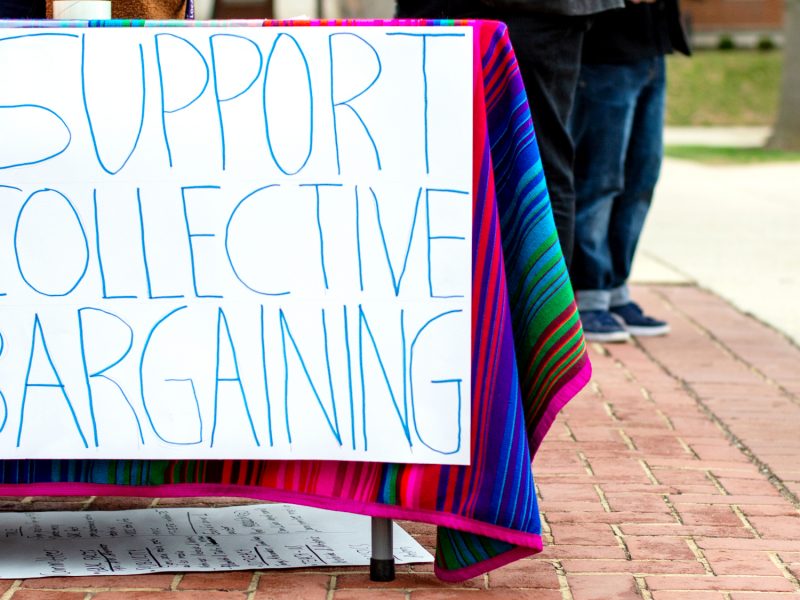
Graduate workers need a recognized union to fight for each other — not just in the face of the federal government cutting research funding and attacking international students, but also because our university administration is committed to ignoring our needs. I, and a majority of my coworkers, want to collectively negotiate a legally enforceable contract with the university over our working conditions.
This past year, we sent a formal request for voluntary recognition to university administrators and organized rallies, including a picket attended by 1,000 people in February and another in October, to demonstrate our desire for a union. In response, university administrators did not recognize us as workers, sent letters to union leaders alleging student conduct violations and continued to lobby against our bill to grant collective bargaining rights to graduate workers at state universities.
If we were mechanics, pilots or even university staff members, the disaster of this year’s summer pay rollout would be a clear-cut violation of our labor rights, and we could file legal complaints over wage theft and contract violations.
But this university and the University System of Maryland have spent untold amounts of money on lobbying the state legislature to deny collective bargaining rights and employee status to graduate workers, meaning we are not protected under the state’s labor laws. Yet the university considers us employees when it’s convenient — we spend long hours working as researchers and teachers, are included in the Maryland State Employee health insurance plan and receive W-2s. But when it comes to honoring employee rights, the university insists that we’re “students first and foremost” so the administration can continue to skirt accountability for flagrant labor violations involving graduate workers.
Last fall, university president Darryll Pines joined Rev. William Barber II for the Presidential Distinguished Forum, where they discussed how to address “the grand challenges of systemic poverty, racism, and economic inequality.” The hypocrisy of watching Pines, who is actively underpaying his workers and whose administration has repeatedly refused to support collective bargaining with grads, speak about morality with Barber, an avowed union supporter and anti-poverty advocate, was striking.
How long will this university preach its commitment to the public good while exploiting the workers whose research and teaching provide that same good? Are we, the graduate workers of this university, not deserving of the same labor rights enjoyed by nearly every other class of public employees in the state of Maryland?
If the university wants to continue ignoring the increasingly frustrated workers who produce its world-class research and teaching reputation, it must be prepared to accept the consequences.
Max Werkheiser is a graduate research assistant in the Department of Chemistry and Biochemistry.