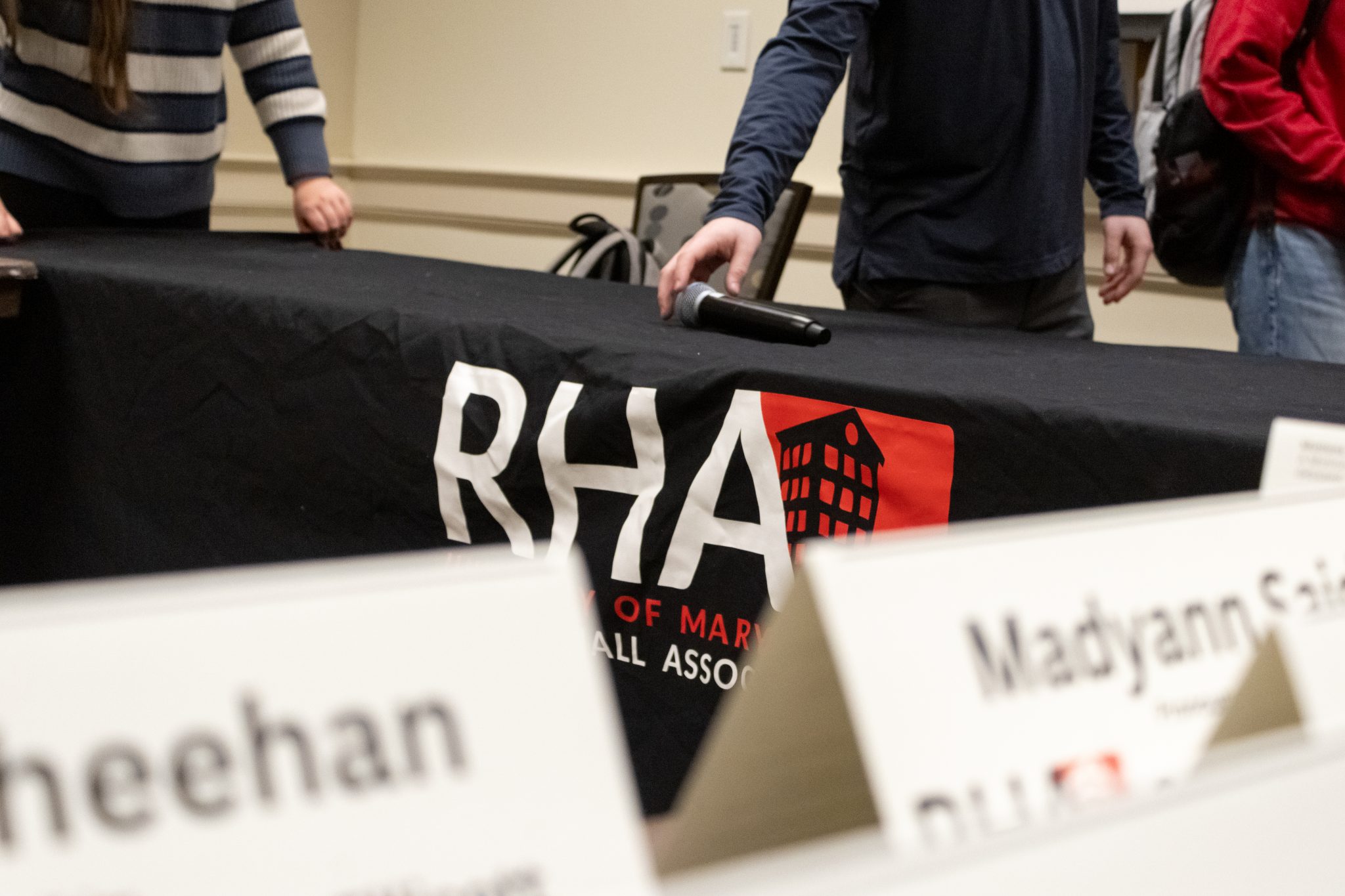
The University of Maryland RHA Senate confirmed several executive members during its first senate meeting on Tuesday night.
More than 25 senators gathered in Stamp Student Union to hear the priorities of the Residence Hall Association’s newest executive board. Senators listened to executive board members’ speeches and asked them questions before voting them in.
The diversity and inclusion action committee organized many events last year, like student led festivals, to promote belonging in this university’s community.
Diversity and inclusion coordinator Giselle Maravilla wants to carry those initiatives into this year. Maravilla emphasized the importance of collaborating with student organizations to highlight them and build community.
[UMD senators concerned about excused absence policy changes]
The sophomore architecture major hopes to do this by introducing workshops and initiating discussions.
“There’s so many [student organizations], and sometimes, people don’t know where to start or where to find them,” Maravilla said. “I want to give them that visibility.”
Claire Bushar, the sustainability coordinator, hopes to focus her attention on decreasing this university’s waste production and improving the efficiency and sustainability of its waste management.
“It’s incredibly important that we take actionable steps … and that we are being responsible stewards of the land and environment we’ve been given,” the sophomore bioengineering major said.
Prioritizing issues that are top concerns of the student body, like inefficient transportation apps, is what transportation coordinator Attowla Kouadio hopes to focus on this year.
[UMD GSG hopes to support international students, fill vacant seats this year]
“I’ve heard a lot of complaints about the transit apps,” the junior information science major said. “I’d try to make it a priority, since bus transportation is a big part of campus.”
Kouadio noted that although he’s still navigating the approach for transportation this year, he’s committed to listening to complaints and wants to try his best to work early to figure something out.
Emily Shoemaker, the president of RHA, told The Diamondback last week that within each pocket of the RHA Senate, each coordinator brings their own priorities to the table.
“This year, we’re pretty highly confident that the councils are going to be successful by themselves,” she said.
According to Shoemaker, RHA aims to build engagement between staff across different facilities and residents. The senior information science and philosophy, politics and economics major said that goal remains the same.
“Our goal is still to generally facilitate connections between the staff members who are working on facilities, ResLife, sustainability, transportation, dining, to the students who are actually using those services,” Shoemaker said.
[USM chancellor warns budget cuts endanger Maryland universities, could cause layoffs]
She noted that this is a broad goal, so RHA is narrowing it down into two smaller parts — getting residents and councils to express concerns more freely and stressing the various resources the university has.
RHA also hopes to get a seat on the University Senate for ResLife this year, according to Shoemaker.
But even with these new goals, the association’s mission of fostering connections and confidence will remain.
“We’re going to try to get residents and councils to express their concerns more freely,” Shoemaker said. “Students don’t really understand how much power they have.”