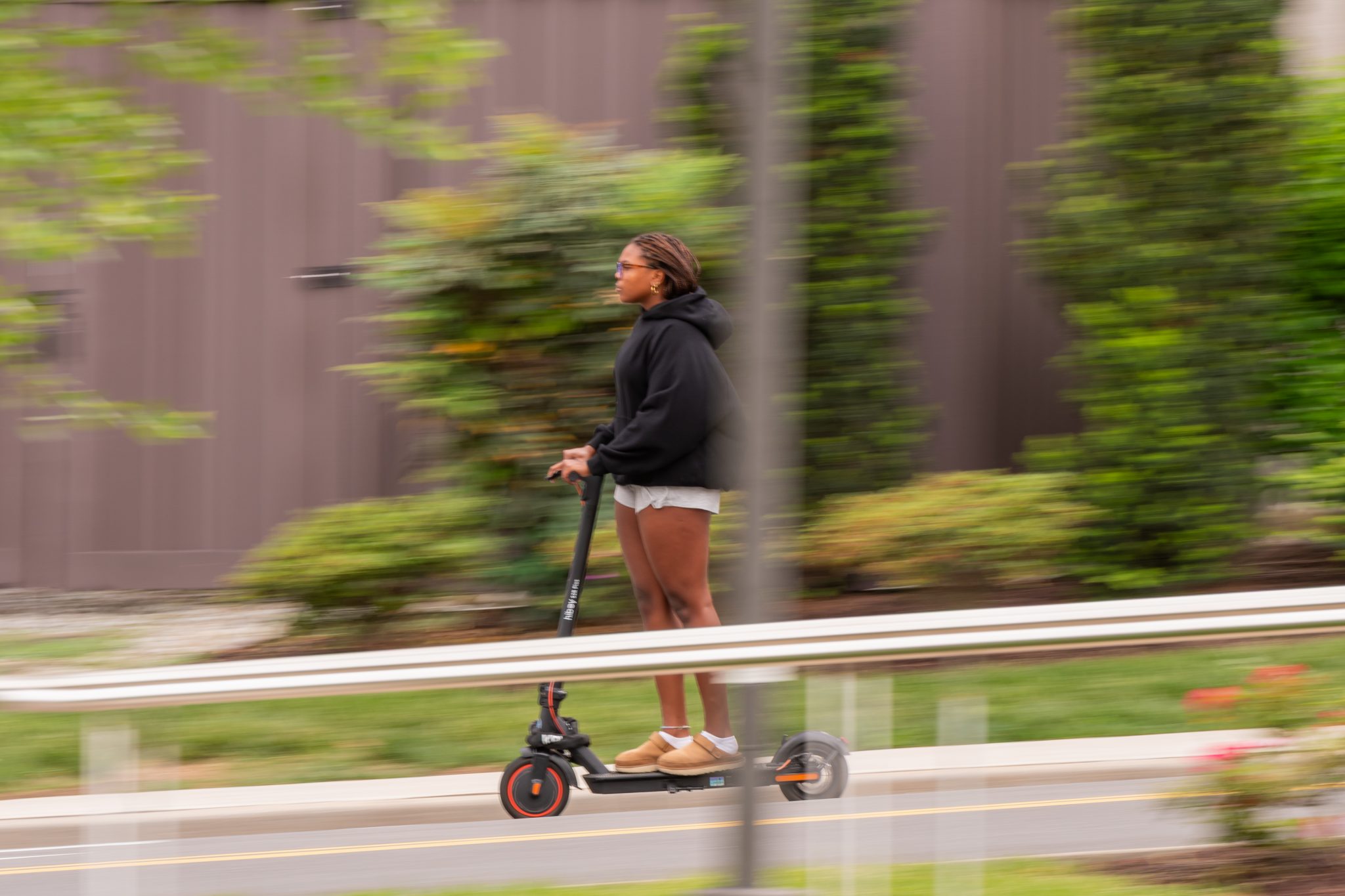
The University of Maryland’s ban of personal electric scooters for on-campus residents has left some students feeling happy and others worried as the first week of classes came to an end.
As of Aug. 1, students living on campus can’t bring their own electric micromobility vehicles to campus, according to the university’s Department of Transportation Services’ website. The ban also applies to residents living in Greek life housing and South Campus Commons.
The new rule, announced in July, is part of a broader set of recommendations developed by the campus micromobility workgroup. The group spent more than a year evaluating how to better integrate electric micromobility on campus, the DOTS wrote in a statement to The Diamondback.
The ban also follows multiple fires that were reported in 2024 due to exploding lithium ion batteries, The Diamondback previously reported. The university previously didn’t allow lithium-ion battery powered micromobility vehicles inside dorms or campus buildings, and started impounding electric scooters in campus buildings after the fires.
[UMD residents cannot bring personal electronic scooters to campus this fall]
Some students, like Marissa McLean, have voiced support for the ban and said it has made campus safer.
McLean said she was “jumping for joy,” once she heard about the ban. McLean said the overall infrastructure on campus could not support all of the students hastily zipping to class on their scooters.
“A lot of the people who were using scooters weren’t using them appropriately,” the senior neuroscience major said.
After the first few days back without as many scooters, McLean said she found campus easier to navigate. Students are now using designated scooters lanes more, she said, and McLean hopes the ban encourages students to use Shuttle-UM bus services.
Other students said the personal electric scooter ban came unexpectedly this semester and left them stressed to find alternate ways of getting to class.
Junior Ashwin Ramkumar bought a personal scooter for $500 last semester in hopes of quickly traveling around campus for his last two years. But he was hit with the personal vehicle ban instead.
“I just wish they at least phased it out,” the information systems and information science major said. “I could’ve had more time to plan … and I wouldn’t have to rush to replace my vehicle so soon.”
Junior architecture major Amy Miller said she relied on her personal scooter as a mobility aid. She was diagnosed with Postural Orthostatic Tachycardia Syndrome in her freshman year after fainting multiple times because of strenuous walks to class.
Due to her condition, Miller said she cannot navigate around the campus’ terrain for long periods of time before becoming seriously ill. After her diagnosis, she got a personal scooter, which made a “night and day” difference to her health.
[UMD announces fines, impoundments for electric micromobility vehicles found in campus buildings]
“Frankly, I’m kind of scared because I don’t want to be sick again,” Miller told The Diamondback.
Miller has now registered with paratransit, a service on campus that provides on-demand shuttle service to community members with disabilities. But Miller feels her freedom is more restricted than when she could move freely on her scooter.
Resident students with a medical need for an electric micromobility device can request an exception by completing a form, the department of transportation services wrote in a statement to The Diamondback.
As another alternative transportation option, the university is offering Veo scooters and Capital Bikeshare services at a discounted rate for community members, the department’s website read.
Senior biology major Kevin Zhang said nobody around him really knew the university was considering this ban.
“I just feel there needs to be a lot more public transparency about this stuff, because I think a lot of students really didn’t know all this was going on,” Zhang said. “It doesn’t really make sense why all this moved so quickly.”
The university also cited the lack of infrastructure on campus that would allow for safe, private electric vehicle storage as another reason to implement the ban.
Ramkumar said the university did not have enough charging ports to support the number of scooter users who live on campus.
“If you’re going to bring [a scooter], you basically have to break the rules in order to charge it,” he said. “Unless you wait around for the like five charging ports that are available outside the [Yahentamitsi Dining Hall].”
Zhang had a similar opinion. He said he wishes the university would have updated its infrastructure to support more safe charging stations outside.
“What the university can do is enforce more safety regulations with the scooters themselves,” he said.