Outside the door to the Maryland football team’s locker room, a black sign with white lettering sends a message to anyone walking in:
“Leave your bank statements, car keys, and Louis belts at the door because in here we all pay the same price for success or failure.”
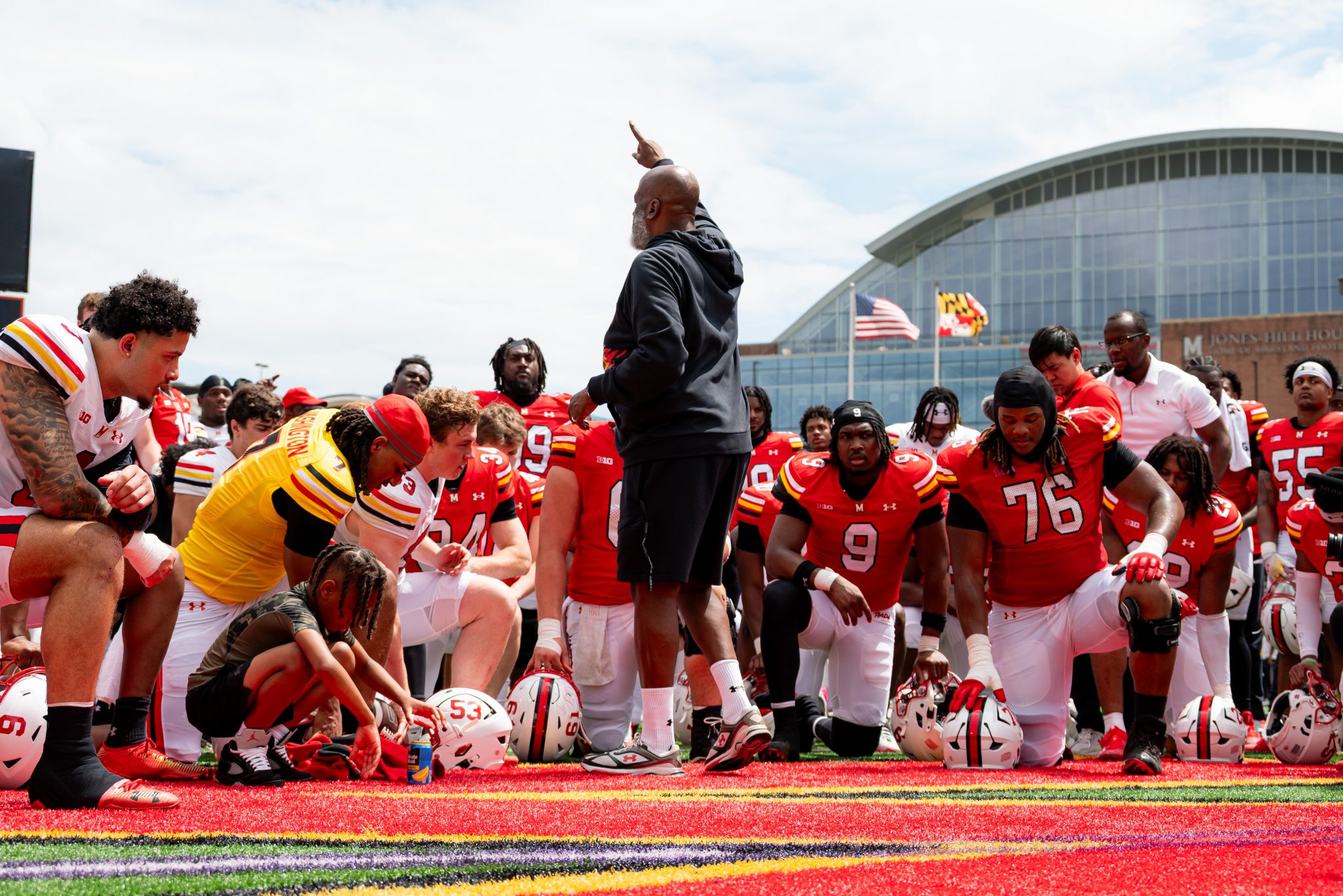
For coach Michael Locksley, now entering his seventh season in College Park, it’s more than a slogan. It’s a reflection of lessons learned from a fractured 2024 season and an effort to reset the team’s culture.
Locksley has been unusually candid about last year’s collapse — a 4-8 overall campaign that saw the Terps crumble amid what he described as a broken locker room dynamic. At spring media availability in March, he admitted he “lost [his] locker room” — a career first.
Then at July’s Big Ten media day in Las Vegas, he doubled down about the team dynamics last season, pointing to internal feuds fueled by college football’s new pay-for-play era.
[Jim Smith plans to embrace change, focus on revenue as Maryland’s athletic director]
Returning players at Maryland’s on-campus media day last week echoed that 2024 was rough. But they also pointed to a stronger, more unified group heading into 2025.
With a 32-36 record through six seasons and a new athletic director in place, Locksley believes the team will produce long-sought results.
“I see this year being a year of elevation,” Locksley said on July 30. “Because of the foundation that we were able to build over the last six seasons, that’ll allow us to bounce back quickly.”
Locksley has pointed to conflict over name, image and likeness money as a major cause of the locker room issues.
As the Terps stumbled to a 1-7 overall finish through their final eight games last season, junior linebacker Daniel Wingate said that’s when the tension set in. Players bickered, questioned who should be on the field and argued over what should’ve happened in games.
“There may have been some jealousy with the new approach to the money thing and people getting money and not,” senior defensive back Jalen Huskey said. “Some people [were] feeling like they deserve this, or they deserve that.”
With 31 players transferring out, about half of that number coming in and two dozen freshmen joining the roster, players believe this year’s team feels more unified. Wingate said the locker room has shifted away from competitive distractions.
[Landmark NCAA settlement paves the way for Maryland to directly pay its athletes]
Redshirt sophomore Neeo Avery said the group has been spending more time together off the field. Defensive back Lavain Scruggs added that Wingate and Huskey have emerged as vocal leaders, while offensive lineman Isaiah Wright grew as a leader on offense.
“We have made it an emphasis to not worry about what somebody else is making, or who’s playing, or this or that,” Wingate said. “[We’re] just worrying about making it about football again.”
Locksley remains confident that the success of the three seasons before last year’s nightmare — including the program’s first-ever streak of three consecutive bowl wins — will help fuel a quick rebuild. He often reflects on where the program stands now compared to where he envisioned it when he took the job.
It’s hard to deny, he said, that Maryland is in a far stronger position than it was in 2019 when the program was reeling from Jordan McNair’s death. Or when soon after, the COVID-19 pandemic changed his second season.
“We’ve done something that hasn’t happened here in 130 years in Maryland football, and then the goal post shifted with the [NIL] landscape. We’ve pivoted, navigated. There’s been change,” Locksley said. “That’s the newness that keeps me really excited about what this year brings.”