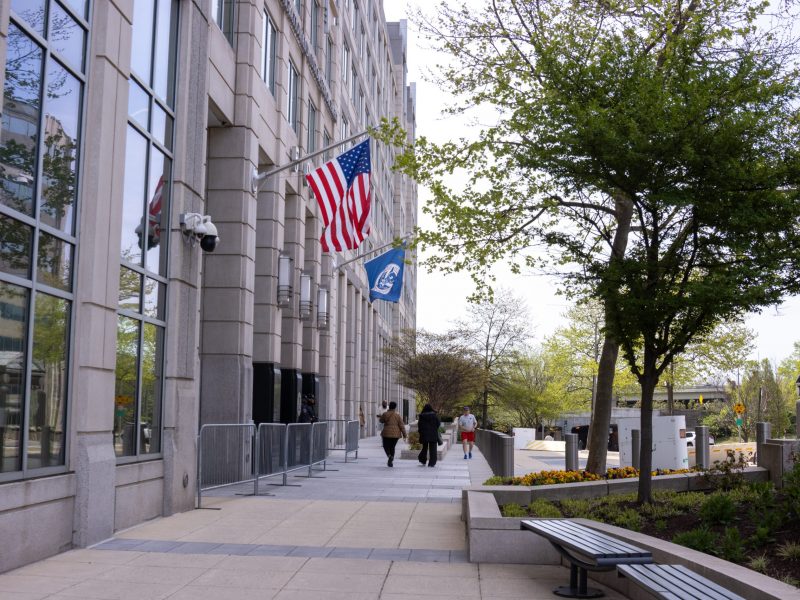
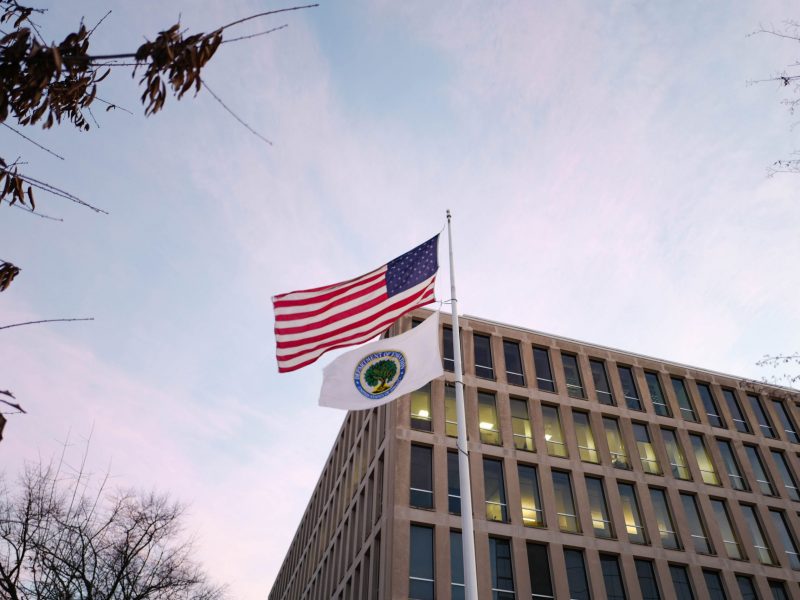
The Supreme Court allowed President Donald Trump’s administration to lay off nearly 1,400 employees from the Department of Education.
The court decided 6-3 on July 14 to block a lower court order that temporarily halted the layoffs, which were first announced in March. The almost 1,400 employees have been on paid leave since March and would have been laid off in June if not for the lower court’s ruling.
The Supreme Court’s decision allows the administration to continue dismantling the department as part of a broader push to shrink the federal workforce and the government’s role in education.
Secretary of Education Linda McMahon wrote in a statement after the ruling that Trump “has the ultimate authority to make decisions about staffing levels, administrative organization, and day-to-day operations of federal agencies.”
[UMD education students remain passionate amid U.S. education department changes]
The University System of Maryland said in a statement Monday that it is “monitoring the developments” from the department to see how they could impact the system.
Education experts have warned that the layoffs would hinder the department’s ability to enforce civil rights protections, manage the student loan system and provide student aid and grants, The Diamondback reported in March.
The education department’s main responsibilities include providing financial aid, overseeing research and administering student loan programs, according to its website. The department has little to do with education policy, where local and state governments take a more direct role.
The department awards 13 million students more than $120 billion each year in grants, low-interest loans and work-study funds, according to its website.
Trump signed an executive order on March 20 directing McMahon to “take all necessary steps” permitted by law to facilitate the department’s closure.
[UMD researchers left with uncertain future after NSF cuts 14 grants]
Education dean Kimberly Griffin wrote in a statement to The Diamondback that a weakened department could lead to delays with the FAFSA application, which would affect the admissions and enrollment process at this university.
A diminished department could also result in less data collection and research on student performance and teaching practices, Griffin wrote.
“This is an important time to start developing research questions and projects that help us better understand the implications of some of these staffing reductions and policy choices,” Griffin wrote. “This work will ground and guide advocacy for the reinstatement of positions or future policies, and can help us better understand the most critical policy interventions to advancing thriving and success.”
While it would take an act of Congress to officially shut down the education department, Trump has suggested its responsibilities can be shifted to other departments, such as the Department of Treasury and the Small Business Administration.
Nine education department employees have already been reassigned to the treasury department, according to the Associated Press.
This university did not provide comment.