Views expressed in opinion columns are the author’s own.
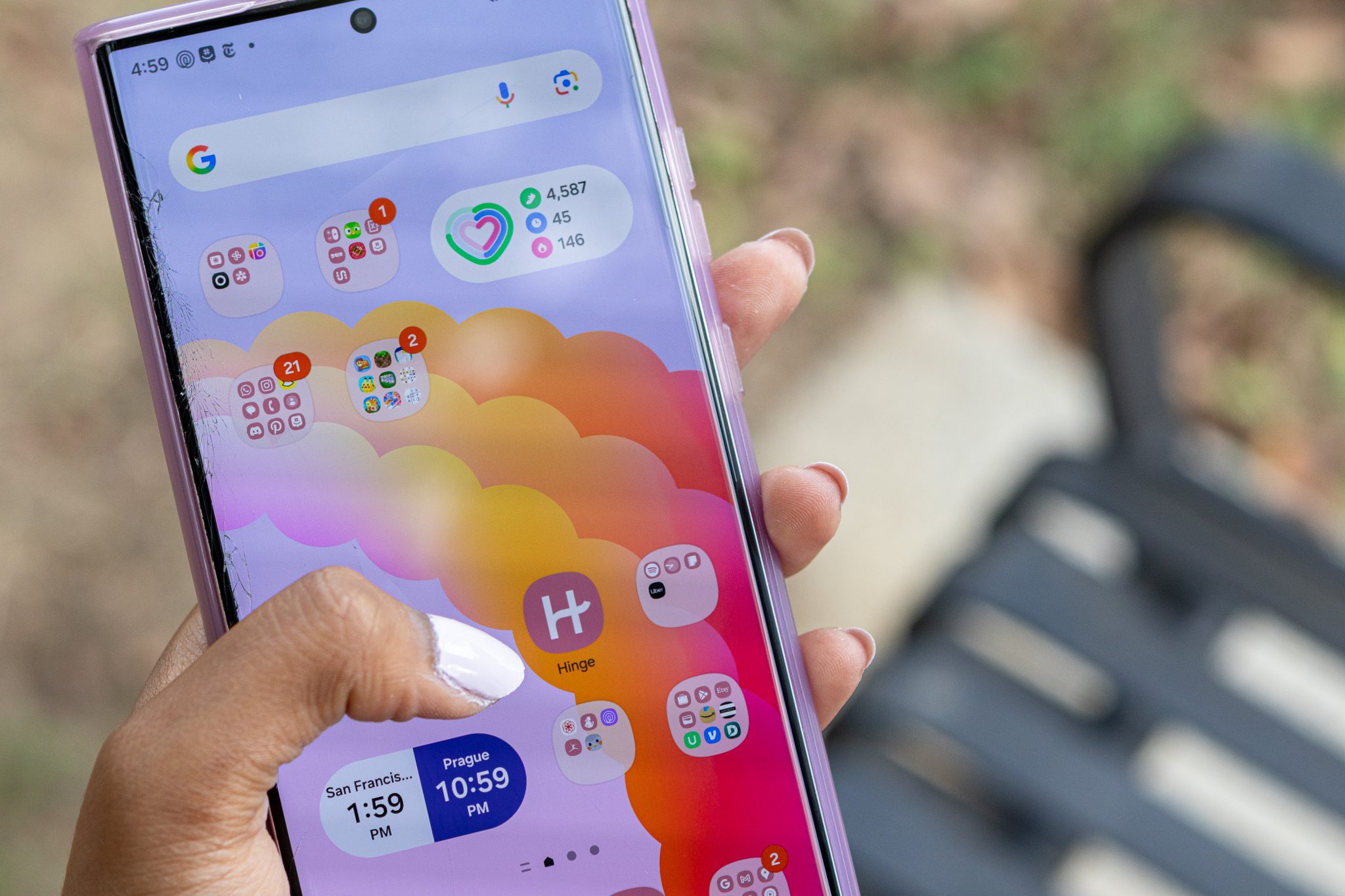
We use our phones every day for many purposes: call, text, order food or binge our favorite shows. The list goes on. We often over-rely on it to the point where our life depends on it. If we are even a moment away from our phone, we feel different, yearning to reach for it.
This behavior is common now, and it could not be more evident than in college students. I admit, I myself am a victim to using my phone many times throughout the day, often missing out on “living in the moment.”
Everywhere I go on campus, from my classes to the dining hall, I see nearly everyone glued to a screen. It’s as if people are afraid to develop social connections, or they have become so attached to their phones that this is the new reality: being glued to the smartphone.
I assure you this is not an exclusive case: Across the country in countless college campuses, increased phone usage is becoming a major issue, affecting students’ sleep schedules, study habits, routine and discipline. In a study done at King’s College London, nearly four in 10 students are addicted to their smartphone, affecting their sleep, mood and most concerning, overall academic performance.
While one may not observe the negative side effects, using a smartphone longer than usual during the day can drain one’s focus and memory. At Yeshiva University’s Stern College for Women, a few professors have banned laptops and smartphones, stating that teaching a group of students who use laptops and phones in class is seen as competing with whatever students are doing behind their screens, citing this as a means of distraction.
For this reason, this university should require professors to have students turn in their phones at the start of class and retrieve them at the end. This solution may seem like a violation of student rights, but the goal in mind is to help students increase their retention, active listening, active engagement with class content and making connections in the classroom without a phone.
It is the sad reality these days that while individuals, especially students, may spend hours texting someone, they cannot make a proper face-to-face connection. Ultimately, the responsibility falls on all of us — students, professors and administrators — to recognize how serious this issue has become and take meaningful steps to address it.
If this university truly wants to support student success, it must act now by implementing stronger classroom phone policies. Encouraging professors to collect phones at the start of class is not about restricting freedom — it’s about giving students the chance to fully engage, focus and make the most of their education.
By taking this simple but impactful step, the university can help foster healthier habits, stronger academic performance and a more productive learning environment for everyone.
We cannot ban using phones throughout the day for all students on campus because, quite frankly, there is no feasible way to implement and enforce such a rule. Not to mention it’d violate students’ personal freedoms.
So, while I urge the university to mandate this rule in classrooms, I also strongly encourage others to limit their phone usage as much as possible. Although this is difficult to enforce, it is crucial we take a break from our screens.
We need to find joy without the use of our cell phones.
When walking to class, observe your surroundings. At a vibrant and bustling college like this university, there is always something going on outside. Taking in the surroundings allows one to engage with the real world.
Additionally, why not eat with someone you know instead of spending that time scrolling through your phone? Our phones are important, but we should not rely on them as our first option when we want to enjoy some time to ourselves.
If we students truly want to protect our cognition, energy, mood and overall well-being, the first step is to go away from the screen, reconnect with others and engage with the world around us. We only get one life, so why not spend it fully present, making the most of the real experiences and relationships that matter?
Rishab Sai is a sophomore public health practice major. He can be reached at rsai1@terpmail.umd.edu.