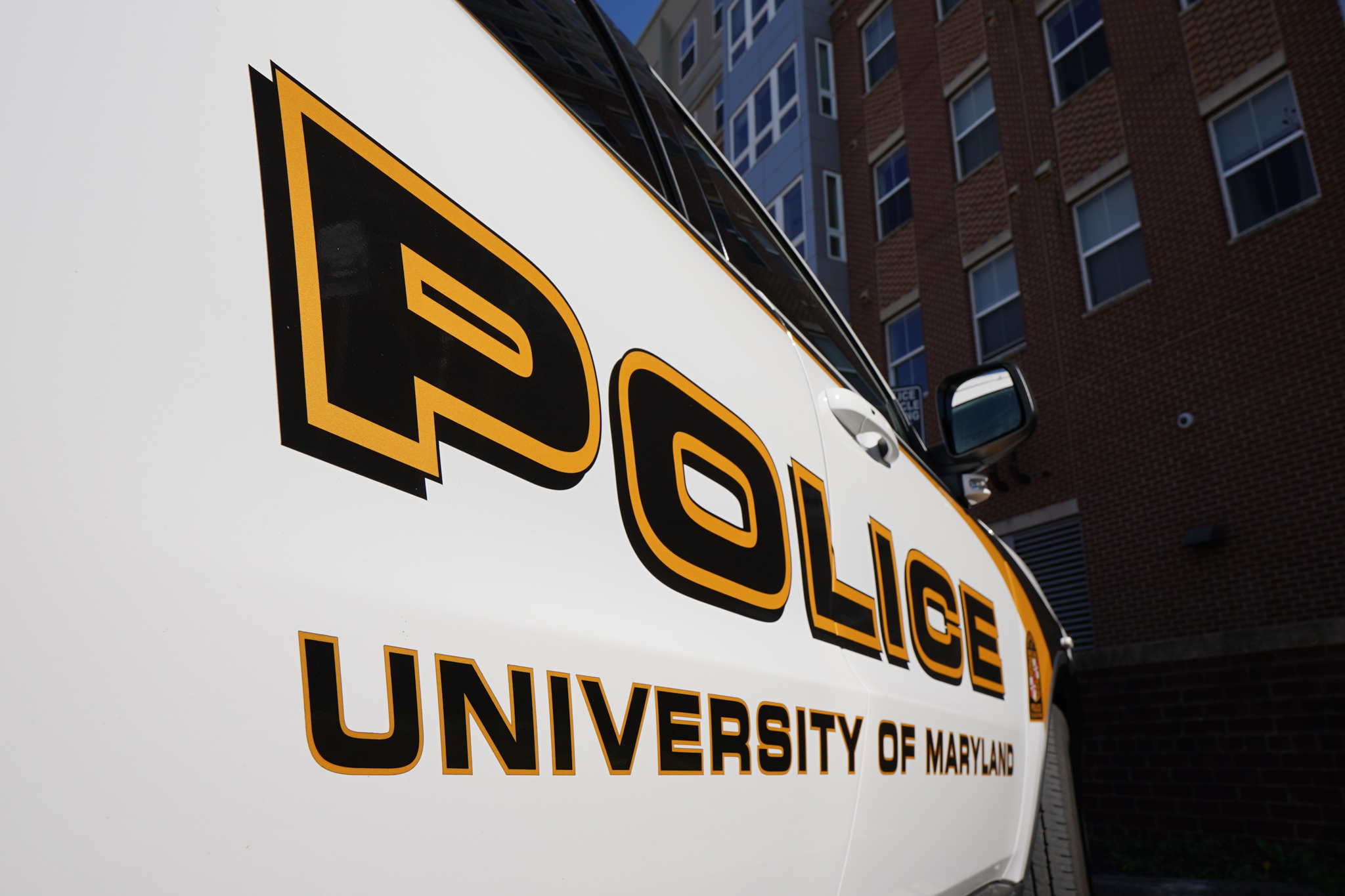
A civil liberties advocacy group sent a letter Monday urging University of Maryland officials to drop charges against two student journalists that UMPD detained as they reported on an October event and protest.
Riona Sheikh and Rumaysa Drissi took photos and recorded protesters who chanted outside an event hosted by this university’s Students Supporting Israel chapter that featured Israel Defense Forces soldiers.
Sheikh and Drissi were reporting for Al-Hikmah, the university’s Muslim student newspaper, when University of Maryland Police detained them and two protesters.
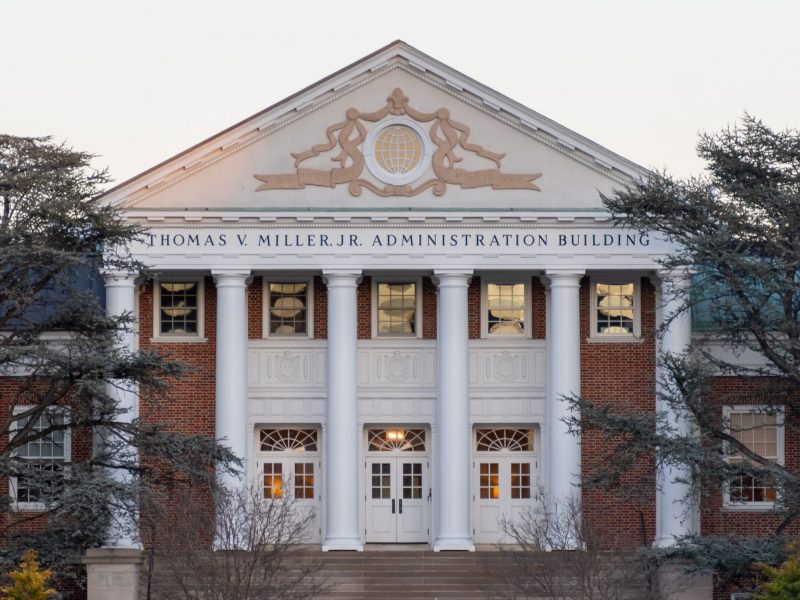
The Foundation for Individual Rights and Expression sent the letter to legal affairs and general counsel vice president Jay Rosselló, as well as assistant dean and student conduct director James Bond and associate student conduct director Vanessa Taft.
Sheikh and Drissi face four charges of violating the student conduct code. They include:
- Intentionally and substantially interfering with the lawful freedom of expression of others
- Engaging in disorderly or disruptive action that interferes with university or community activities
- Intentionally furnishing false information to the university
- Failing to comply with university official directives, including law enforcement
Student press counsel Marie McMullan wrote in the letter that the First Amendment protects the reporters’ newsgathering. McMullan requested a university response no later than Dec. 18 confirming it will drop the interference and disruption charges.
[UMPD detains protesters, student journalists outside event with IDF soldiers]
“Both an anti-IDF protest taking place on campus and the police response to it are newsworthy events,” McMullan wrote. “These acts were protected and nondisruptive, and finding otherwise will only compound the chilling effect spurred by these investigations.”
The Al-Hikmah reporters’ disciplinary hearings are scheduled within the next couple of weeks.
UMPD wrote in a statement on Wednesday that four people were detained for failing to obey law enforcement and for disrupting a university-sanctioned event.
“We strongly refute the claim that the protected classes of these individuals played any role in UMPD’s actions,” the statement read.
In videos reviewed by The Diamondback, officers ask Sheikh, Drissi and the protesters to provide university ID. Sheikh and Drissi declined to give their university IDs, but the two protesters gave identifying information and were able to leave.
“The police were so immensely convinced that a brown girl and a hijabi have to be pro-Palestine protesters,” said Sheikh, a junior international relations major and Al-Hikmah’s editor in chief. “They detained not only people who were just trying to express their discontent with having murderers on campus, but also journalists who were just doing their job.”
The Diamondback reviewed more than two hours of footage, including officer body camera footage obtained in a public information act request, witness videos and videos from staff reporters on site. The videos show the journalists holding cameras and standing behind protesters who chanted and held signs.
Sheikh and Drissi did not shout, chant, protest or hold signs outside the event, video shows. They recorded on a professional camera and cell phone as protesters chanted, “Baby killers” and “IOF off our campus.”
[UMD SGA condemns student-hosted event with IDF soldiers, demands university issue apology]
In the letter, McMullan referenced another Maryland case involving a photojournalist who was arrested after recording a police arrest on a public street. The U.S. Justice Department wrote in a 2013 filing that “recording police officers in the public discharge of their duties is protected First Amendment activity.”
Only certain parts of campus are considered full public forums, such as Hornbake Plaza, according to the university’s website. These forums protect all expression, such as recording, reporting or protesting, under the U.S. Constitution.
Classrooms and dorms are not considered public forums and can have greater limitations on speech, the website reads.
The university must enforce all restrictions equally without discriminating based on speakers’ viewpoints, according to the Legal Information Institute. Limitations on one location, such as a classroom, must apply to everyone in it.
Diamondback reporters covered the event and recorded the detainment. Neither reporters were asked for press credentials or university IDs. They wore press credentials around their necks and self-identified.
Uriel Appel, president of this university’s Students Supporting Israel chapter, reported this university’s Students for Justice in Palestine chapter and Al-Hikmah for potential policy violations to the student conduct office after the detainment. The Students for Justice in Palestine chapter hosted a protest outside Jiménez Hall as the event continued.
The senior neuroscience major wrote in the report that two Al-Hikmah journalists asked to photograph the event inside the room and left after he said no. He heard the protests outside the event and saw the journalists recording.
Video shows the protesters and student journalists did not enter the classroom where the event was held.
Appel added that some event attendees felt “fear and discomfort from the protesters chanting” while leaving. In a Wednesday statement to The Diamondback, Appel wrote that his chapter “supports open dialogue and conversation.”
“No student should feel unsafe on their own campus,” Appel wrote. “We will not tolerate intimidation.”
[UMD Students for Justice in Palestine petitions to cancel event with IDF soldiers]
A UMPD officer’s account said it seemed likely Sheikh and Drissi knew the protesters who were detained. The document, obtained by The Diamondback, references an interaction in which the students spoke among themselves and exchanged phones.
Sheikh and Drissi told The Diamondback that being detained was the first time they met the protesters. Sheikh said the four students felt the need to stick together for their safety.
“We just saw protesters going in, we came in after them,” Drissi, a junior public health science major, said. “We were like, ‘This is a really good story to report about.’”
Video shows that Drissi, holding a professional camera, wasn’t detained until she approached officers to clarify that Sheikh was reporting on the event.
That moment, Drissi said, was “very obvious profiling.”
Sheikh and Drissi added that it seemed the detainment was part of a pattern of the university’s approach toward speech in support of Palestine. The university declined to comment on this story.
Drissi said she stepped in to cover the story after other Al-Hikmah staffers expressed concerns about entering the protest. She said regardless of the current situation, she would report the story again.
“A lot of people before I walked in tried to talk me out of doing it because of fear of retaliation from administration or from UMPD,” Drissi said. “Honestly, I just wanted other people on campus to be able to see that students here feel this way and they care.”