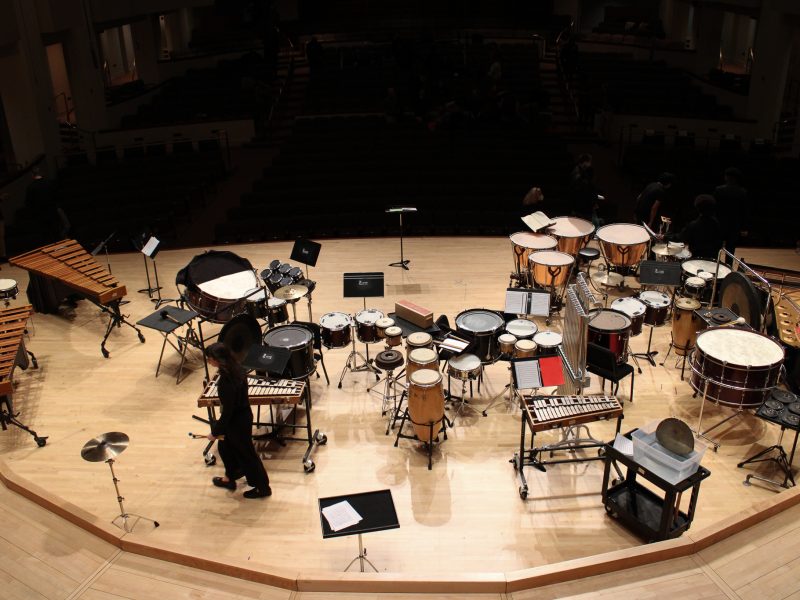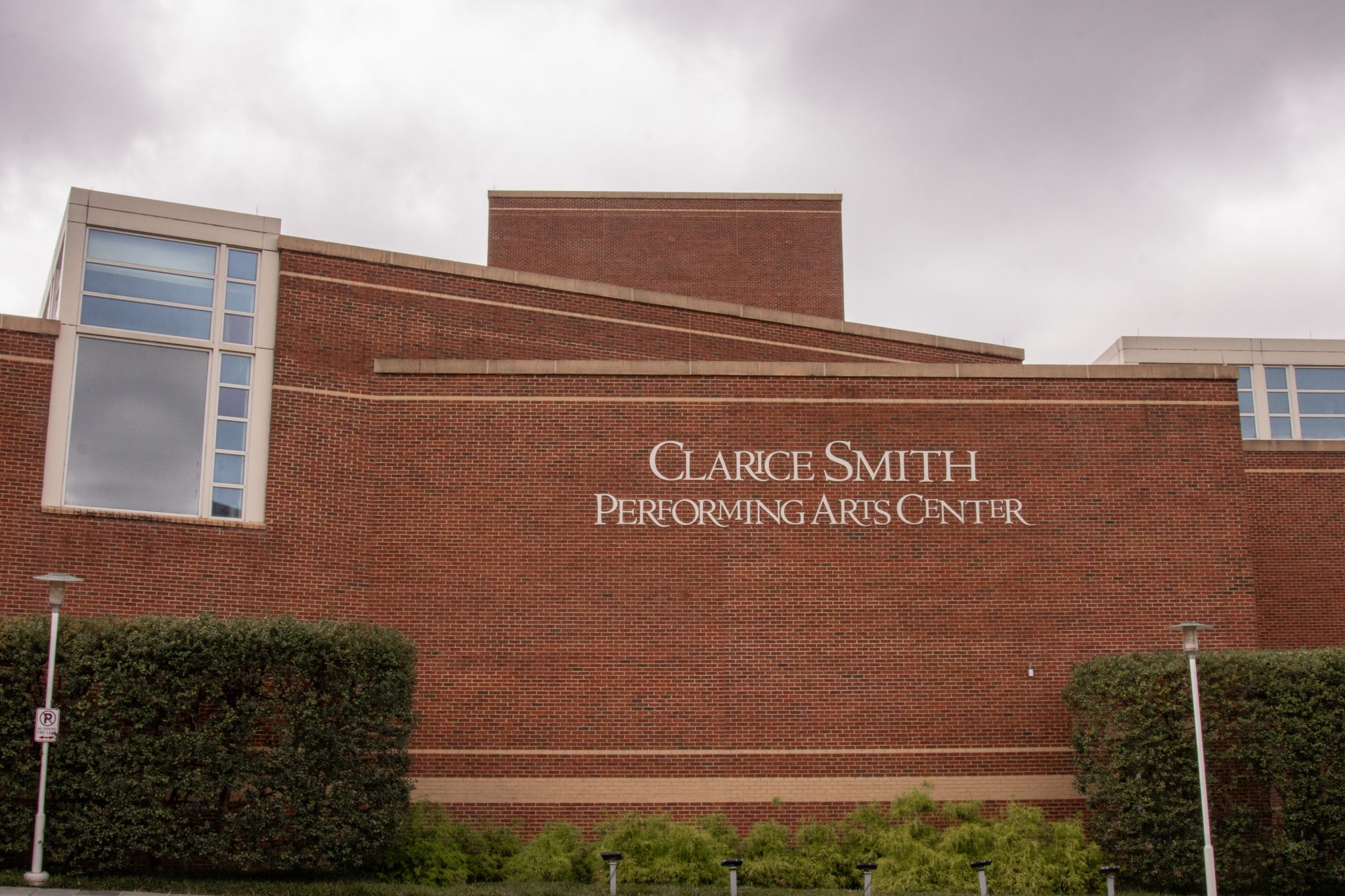
Two musical troupes, the Japanese Koto Ensemble and Balinese Gamelan Saraswati, performed in Kay Theatre at The Clarice Smith Performing Arts Center on Thursday and spotlighted their cultures through their respective traditional instruments.
Both are part of the ethnomusicology program at the University of Maryland school of music. The koto ensemble is made up of both undergraduate and graduate students and the Gamelan Saraswat ensemble is composed of students in the music school and from other departments at this university.
Instructed by Yuriko Gandolfo, a koto player since 1988, the koto ensemble plays traditional Japanese instrumental music primarily from the 20th century. Nyoman Suadin, a musician, composer and dancer, directs the Gamelan Saraswati, which takes its name from the Hindu goddess of knowledge.
Throughout the many instrumental performances, the audience caught a glimpse of both Japanese and Balinese culture.
Kyra Hawes, a junior social data science major and a performer in the Gamelan ensemble, said Thursday’s performance was a culturally immersive experience.
“It was a way to culturally immerse myself with Southeast Asian culture, because I’m also Filipino, so I got to learn about a different region,” Hawes said.
[Maryland Ghostlight Company performs haunting vignettes in ‘Sleeping Giant’]
The koto, a traditional Japanese instrument dating back to the seventh century, is a 6-foot-long board with movable supports to tune its 13 pluckable strings. With the koto’s classic sound, the ensemble performed five songs which reflect the simplicity and beauty of Japanese nature.
“Kojo no Tsuki (Moon over the Castle Ruins)” regales the prosperity and dramatic downfall of a samurai lord. The song features a slow, melancholic harmony. It pairs with mysterious vocals and intense chord progressions, reflecting the suspense of the original story for the audience.
“Kobiki Uta (Woodcutters’ Song),” a traditional Japanese folk song, switches between high and low notes before transitioning to a calming melody. In a unique movement, ensemble members quickly trace their fingers across the strings, making a ripcord sound.
Elizabeth Harlan, a junior psychology major, said she appreciated the cultural diversity in the koto ensemble’s music because it allowed her to explore traditions she was previously unfamiliar with.
“It’s just really cool to see those kinds of cultures represented,” Harlan said. “I didn’t really know much about the instruments, especially the string. It was cool to get the background on that.”
“Akimatsuri no Insho (Impressions of an Autumn Festival),” portrays visions of a festival celebrating a good harvest. The contented and fast-paced melody created an image of a robust celebration for audience members, and served as a jubilant finisher before transitioning to the Gamelan portion of the concert.
Gamelan, coming from the word “Gamel” which means “to play”, is an instrument constructed of metal-keyed xylophones and gongs. Paired with drums and a gong, the Saraswati performed three lively songs.
Maxfield Kuhlman, a Rockville resident, said he was excited for the Gamelan performance and that it was a major reason for his attendance.
“It’s a really cool opportunity,” Kuhlman said “It’s not every day you get to hear a Gamelan performance.”
[Bashing through the snow: SEE hosts ‘Wreck the Halls’ rage room]
“Bapang Selisir”, a fast-paced piece with slow increments, featured four Balinese dancers drawing from classical Legong style. The dancer’s movements are carefully choreographed to pair with the song’s melody, often switching rapidly between slow and fast movements.
With elegant costumes and exquisite dance, the performance was a highlight for audience members.
“The dancers were really cool, and the way the moved along with the beats and everything,” Harlan said.
“Gilak”, a song with a cycling gong pattern alternating between tempos and dynamics, sped through the ears of the crowd, sending shockwaves with each change in pace.
As the concert came to a close, Kuhlman said he found the concert a unique intersection of the arts.
“It’s a cool opportunity to be able to interact and learn about different cultures in such a concrete way like that,” Kuhlman said.