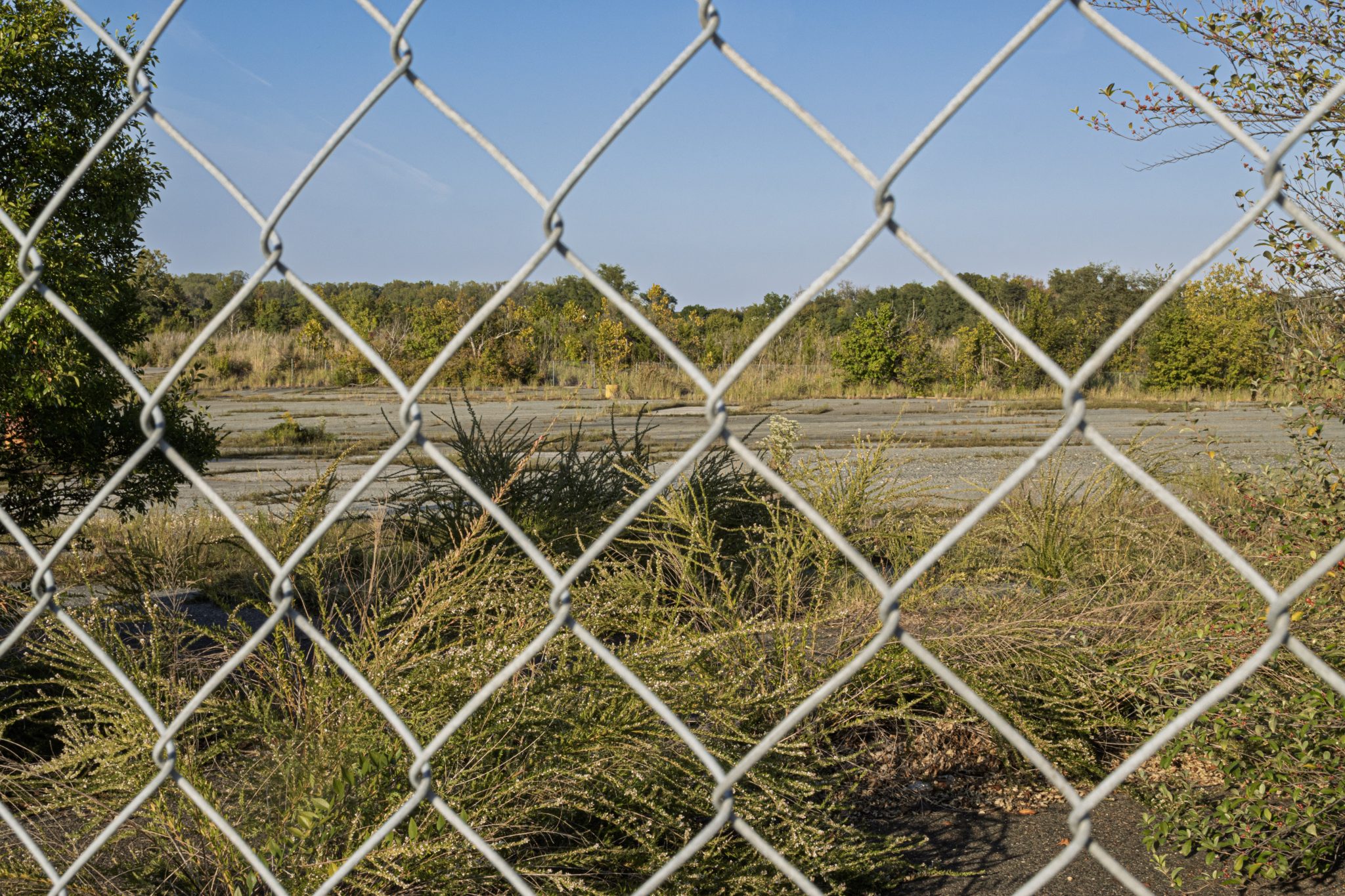
After months of public feedback, Prince George’s County’s data center task force released its final recommendations for where and how data centers should be established in the area.
The task force published the report on Nov. 24, which suggests county lawmakers implement a more extensive permitting process that prioritizes public engagement for each data center project. The recommendations come after the county government faced backlash for approving plans to build a data center on an 87-acre property that used to house the old Landover Mall.
In response to the community’s concerns, County Executive Aisha Braveboy signed an executive order in September to temporarily halt the permitting process for all new data centers countywide until the end of 2025. Shortly after, the Prince George’s County Council voted unanimously to do the same for six months.
The task force has held regular meetings since May to examine the potential risks, positive impacts and economic benefits of data center development in the county. Data centers are physical facilities that store vast rows of computers that process and store online information. But the rapid growth of new facilities across the U.S. has raised environmental concerns about their impact on local communities and their significant use of water and energy.
[New Prince George’s County Council chair hopes to move beyond status quo]
District 5 council member Shayla Adams-Stafford, whose district includes Landover, told The Diamondback the council’s decision to pause the development of new data centers for six months would give it enough time to draft legislation based on the task force’s findings.
“The goal is … to have these informed standards that will come out of the task force,” Adams-Stafford said. “But in addition to that, we want to just look at what are best practices that are happening around the region.”
In an effort to spur economic growth and bring more jobs to the county, the council passed legislation in 2021 allowing the county planning board to approve these projects without requiring council review. But the petition says this process minimizes transparency and community engagement.
One of the task force’s 14 recommendations calls for all data center proposals to go through a stricter permitting process than previously required, which requires the projects to be more strongly reviewed by county officials and more community input through public hearings.
Donald Slaiman, a task force representative for an electricians union covering Maryland, Washington, D.C. and Virginia, said the stricter process could deter data center developers from choosing sites in Prince George’s County because it would take longer to get their plans approved than in other areas across Maryland or out of state.
“I think it’s necessary because of the misunderstanding by the community about these data centers,” Slaiman said. “But I think it’s just gonna be a lot harder to attract the industry because everybody’s trying to attract it now.”
Additionally, the report suggests that county lawmakers tighten zoning regulations to limit data centers in non-industrial areas, such as those near neighborhoods and schools. It also calls for restricting data center development in “environmentally sensitive areas.”
The report includes several other recommendations addressing data center development’s environmental impact, including proposals to encourage environmentally friendly modifications to the facilities and to implement a fee for high energy usage.
Research conducted by the Environmental and Energy Study Institute found the large data centers can use up to several million of gallons of water a day to keep their technology cool and produce high carbon emissions.
[New Prince George’s County program aims to make solar panels more accessible, affordable]
University of Maryland Environmental Science and Technology professor David Tilley, also a task force representative, said the group examined several environmental concerns caused by data centers. But Tilley said while data center development does carry an environmental impact, he also sees its economic benefit.
“It’s definitely a double-edged sword, because to me, the biggest environmental concern is the power, the electricity that’s needed to run the data centers,” Tilley said. “However, the industry itself is growing by leaps and bounds.”
Data center development is a controversial topic within the county. Earlier this year, more than 20,000 people signed a petition urging lawmakers to stop the Landover project before Braveboy and the council temporarily halted permitting.
While in session, the task force also held four community meetings to allow residents to voice their concerns on data center development, according to the report. Community members at the meeting shared their perspectives through written comments and discussions.
During the most well-attended community meeting on Oct. 25, which hosted more than 400 people, the task force received 118 comments saying they were “strongly opposed” to data center development in the county, reads the report. Many of the comments voiced concerns about the environmental impacts of data centers.
During the final task force meeting on Nov. 12, District 6 council member Wala Blegay said she will prioritize the concerns of county residents and aims to introduce legislation to ensure a transparent development process.
“We need a process that ensures the community gets a voice,” Blegay told the task force last month. “And frankly … the people before us have put us in this situation by fast tracking something when they had no input from the community, which led to the outrage that we’re receiving now.”