Dozens of meeting rooms lined the Park MGM Hotel’s conference center. The sound of slot machines echoed from the nearby casino floor.
Buzz Williams, fresh out of a postgame shower, met his Maryland men’s basketball coaching staff in their designated ballroom on the first night of the Players Era tournament in Las Vegas.
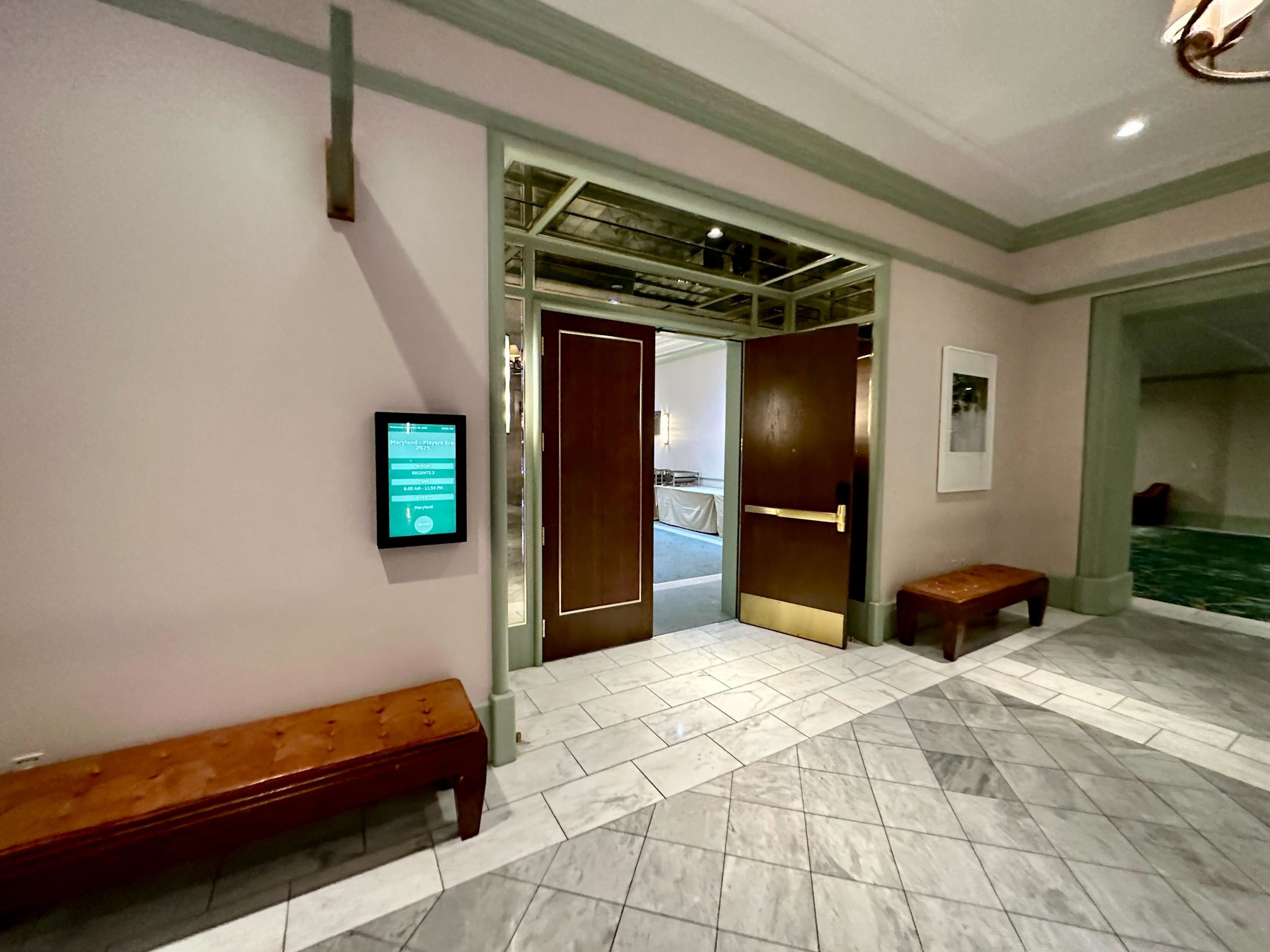
Red chairs and a large projector made up one side of the 12-foot tall room. Circular tables were placed across the blue carpet on the other half.
Food rested on a white tablecloth along the right wall. It was needed energy. After playing a game that night against UNLV, Maryland’s staff had 20 hours to prepare for then-No. 12 Gonzaga.
The Terps played three games in three days during the Thanksgiving week tournament. Maryland’s staff spent nights locked in their ballroom headquarters, scrutinizing gameplans and schemes amid a rigorous schedule.
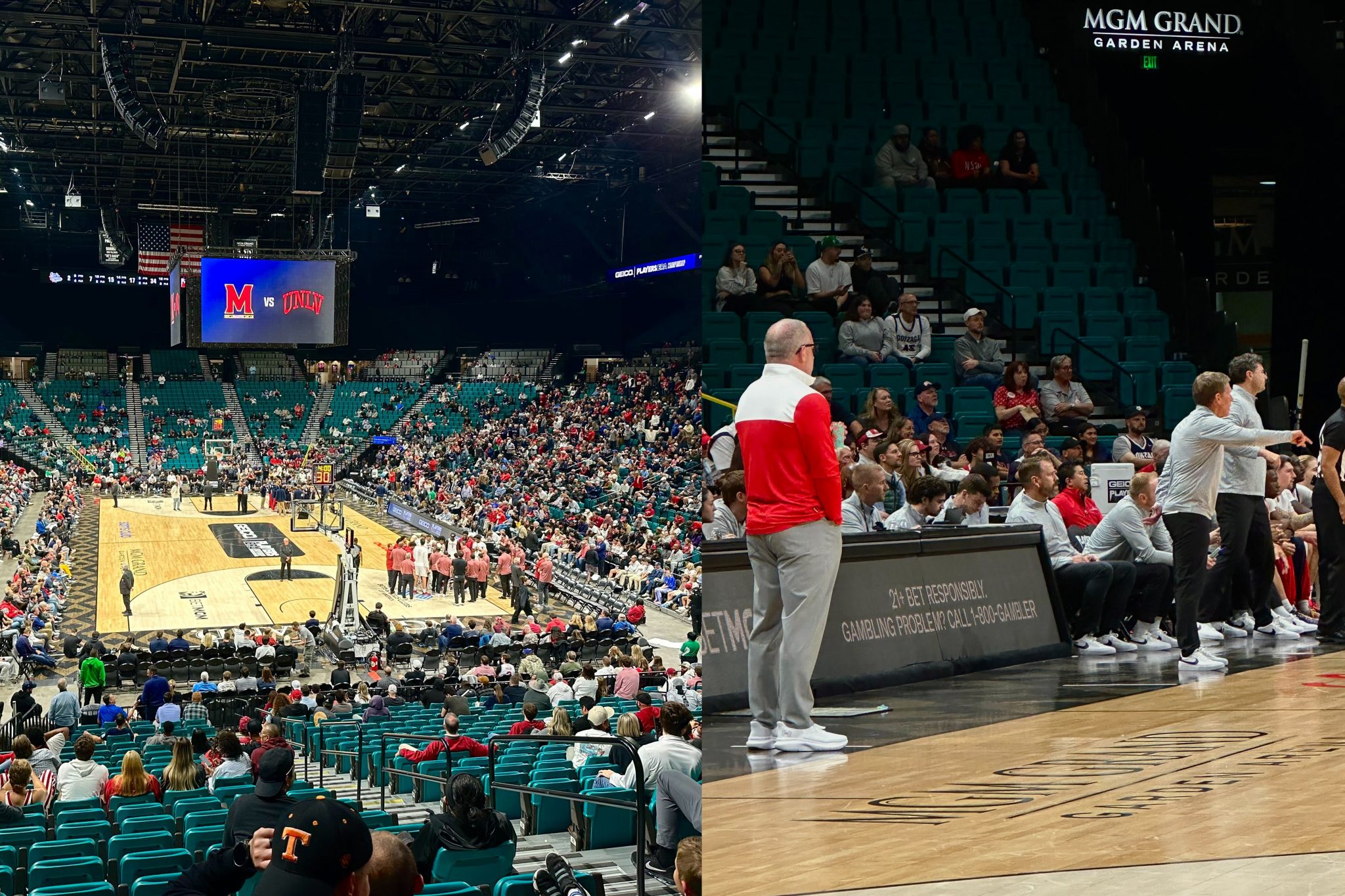
Tipoff for Maryland’s 74-67 tournament-opening win over UNLV wasn’t until 9 p.m. PST on Monday. It matched the Terps’ latest local-time start for a regular-season game since 2017.
Williams’ postgame press conference ended at 11:45 p.m. PST — quite a shock to his jet-lagged body clock.
“[It’s] the latest I’ve been up in a while,” Williams quipped as he left the MGM Grand Garden Arena media room.
His night was just starting.
First came individual meetings with defensive coordinator Devin Johnson and offensive coordinator Lyle Wolf. Williams posed rapid-fire questions based on the coaches’ film watches, and they filled him in.
[Early takeaways from Maryland men’s basketball’s season]
Maryland’s staff worked until 3:30 a.m. PST, according to Wolf. Tipoff against Gonzaga was 15 hours away.
Williams, a meticulous planner, schedules his game days down to the exact minute. He takes pride in maintaining an incredibly detailed calendar — it helps him keep routine.
The team spent 15 minutes breaking down analytics prior to tipoff. Williams guided players through film clips for the remaining 22 of their 37-minute “early bird” session. Wolf and Johnson were then each given 12 to 14 minutes.
The Terps then boarded a bus to the Dragon’s Lair Gym for a morning workout. Chapel and breakfast came next before more prep, which began around 10 a.m.
A 90-minute “flow” program started with a scout coach commentating six minutes of opponent game film. The clips are intermingled across multiple two-minute sections to track the opponent’s changes over recent weeks.
Maryland’s staff, which held shootaround on a makeshift tape court in the ballroom, diagrammed defenses guarding “gold” actions — which describe an opponent’s best four traits.
It worked Monday against UNLV. It was futile in Tuesday’s blowout.
Maryland fell, 100-61, to Gonzaga in a loss Williams tabbed as the worst of his 19-year head coaching career.
The Bulldogs logged more than 70 paint points per 100 possessions, first among Players Era teams, in their first five games of the season.
It’s safe to say Williams identified the area as one of their gold actions that morning. The undersized Terps limited Gonzaga to 44 paint points, one of their few successes that night.
But they failed on the perimeter. Poor man defense allowed Gonzaga to connect on a season-high 14 3-pointers, a majority of which were uncontested.
Without a practice between the Terps’ first two tournament games, Williams made a flurry of changes. It was “bad coaching on my part,” he said.
“I won’t be the only coach up all night [prepping],” Williams said. “Of the 18 teams, that’s going to be a common theme … If you’re playing back to back, particularly the opportunity that’s at hand with the level of competition, I think that’s part of it.”
[Maryland men’s basketball outclassed by No. 12 Gonzaga, 100-61]
He was right. Gonzaga coach Mark Few’s Bulldogs joined Maryland, Tennessee, Baylor and Creighton, among other schools, in the Park MGM’s conference-room prep race each night.
Similar to Williams, Iowa State coach T. J. Otzelberger focused on building internal focus in his team’s “exploit mentality.” Houston’s training staff traveled with portable ice tubs that expedited recovery, coach Kelvin Sampson said.
“I don’t think people really understand how hard the staffs work,” Few said. “There’s a tremendous amount of information … there’s only a slight amount that can be absorbed in that short a time.”
Teams found out their third-game opponent around 9 p.m. Tuesday.
The schedule benefited Williams and the Terps. They had a full 24 hours off before facing Alabama on Thanksgiving Eve.
The time differential was different, but the result stayed consistent. The Tide demolished the Terps, 105-72.
“Wednesday night was the second-worst loss of my career as a head coach,” Williams said.
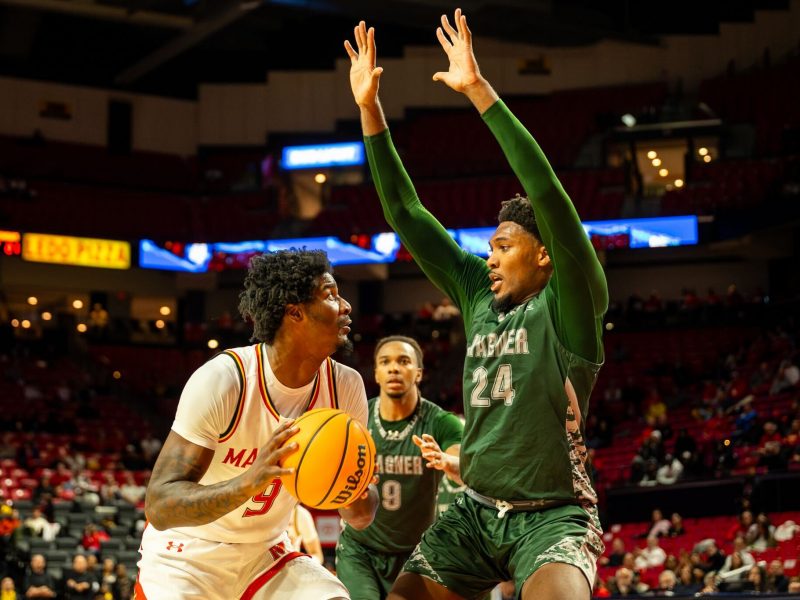
The stage, the opportunity and the competition — paired with two nightmarish losses — illuminated lessons, Williams said. The tight turnarounds in Las Vegas also spurred Maryland to diagnose errors at a faster rate. After nearly a week off, the Terps responded with a 89-63 win over Wagner on Tuesday.
Back in College Park and out of the 1,026-square-foot ballroom, Williams knows tangible improvements are expected. He’s holding himself accountable as Maryland enters Big Ten play.
“We’re just not at the state where we’ve had enough accumulation of reps … to be able to adjust in a conference room,” Williams said on the Talking Terps Radio Show. “The excuse does not suffice losing by 30-plus, back-to-back nights.”