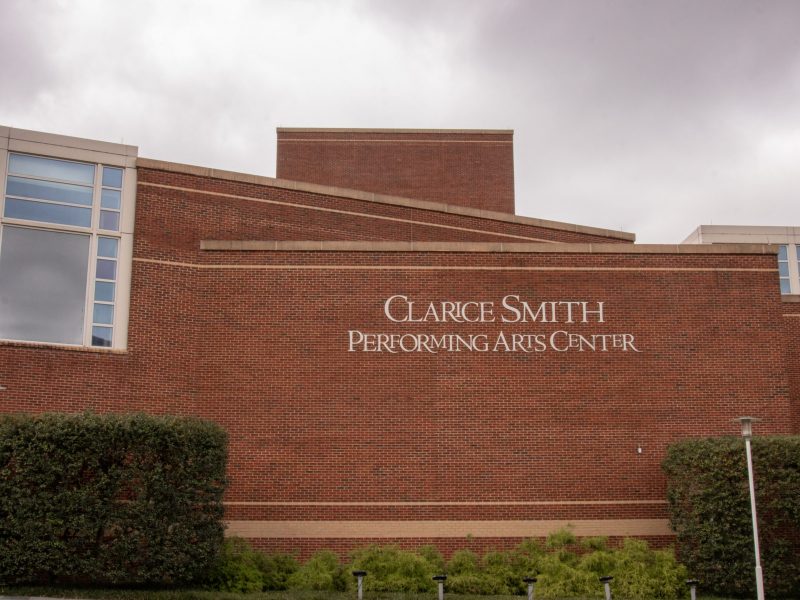
The University of Maryland’s theatre, dance and performance studies school debuted its version of Home, the Tony Award-winning play about self-discovery and community, at The Clarice Smith Performing Arts Center last Friday.
Directed by KenYatta Rogers, an assistant professor of theater at this university, Home captures the life of Cephus Miles, played by sophomore theatre major Qu’ran Mann, a young Black farm owner who struggles with faith, identity and love set against a backdrop of the Vietnam War.
Rogers said he chose to do the play this semester for its timely themes of displacement and resonance for students who may be away from home for the first time.
“We’ve all had that sense of kind of wandering in the desert, wandering in the wilderness and trying to find our way back to who we think we are, and to our either ancestral roots, or cultural roots or in search of our identities,” Rogers said.
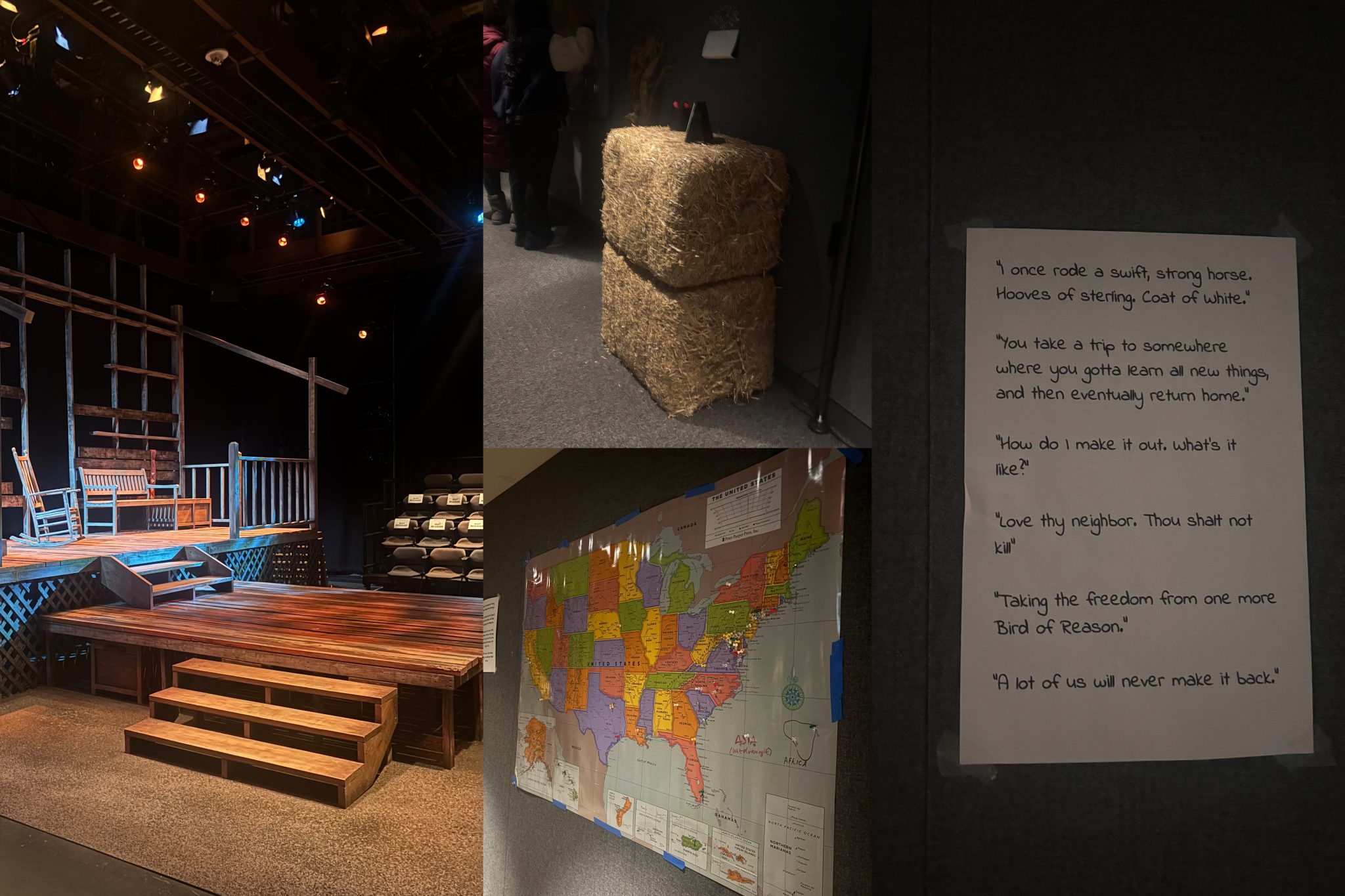
The Kogod Theatre transformed into Cephus’ farm house. As the performers made their way around the wooden porch and floor in front of it, they were inches away from audience members in the front rows. The actors could be heard clearly without microphones, as if they were talking to a group of friends rather than an audience.
Performers made direct eye contact and interacted with audience members throughout the play, further deepening the connection between the characters and the audience.
“What I hope all theater does, but I think this kind of theater does particularly well, is have audiences lean in and listen to a story, to sit a while, to kind of unplug from the world and especially the world of screens and distractions,” Rogers said.
[Maryland Opera Studio brings wacky antics, big laughs in ‘La Finta Giardiniera’]
Rogers made his immersive vision clear from the opening moments of the show.
Two women appear singing an acapella hymn, introducing both Cephus and the story. The captivating opening scene sets the tone for the rest of the play. The two performers clapped along to the beat, getting some of the audience involved as well.
Cephus tells the story directly to the audience, alongside two unnamed people, played by senior psychology and theatre majors Nina-Abbie Omatsola and Drew Okoye. Both take on multiple roles throughout the play, with Omatsola, as Woman One, most notably portraying Pattie Mae, Cephus’ love interest and driving force for most of his life.
Around the same time that Cephus’ grandfather and uncle die, Pattie Mae leaves their hometown of Cross Roads, North Carolina, and marries a man she met at college.
Shortly after, Cephus is drafted into the military for the Vietnam War. When he refuses to enlist, repeatedly reciting, “Love thy neighbor. Thou shall not kill,” Cephus serves five years in prison in Raleigh.
Cephus dreams of Pattie Mae while in prison, and Mann delivers a remarkable and poignant depiction of the longing and grief of their relationship.
Freshman international business major Shirley Bautista enjoyed the play and was impressed by the actors’ passionate performances. The play’s themes of identity and tracing your roots stuck with her.
“Where you come from or your roots, in some way I feel like they’re always going to be carried around wherever you go,” Bautista said.
[UMD students, community bands support DC charity at ‘Teen Age Riot’ concert]
All but exiled from Cross Roads and forced to sell his farm, Cephus moves to a city up North, where he struggles with drugs, job security and love. Cephus eventually returns to Cross Roads after learning someone had bought his property.
The story ends with Cephus learning that Pattie Mae was the mysterious benefactor, reuniting with his lost lover after years. Cephus finds himself back “home” after straying away for so long.
Freshman public policy major Arabelle Gemmell said the message of the play’s ending stuck out to her most.
“What I’ll remember from it most is that there’s still people who are there for you in your lives even if you don’t think they are,” Gemmell said. “So, like how Cephus felt when Pattie Mae came back into his life.”
Rogers said the message of Home represents the experience of many people not only in this country, but around the world who have been displaced or “unfairly ripped from their roots.”
“The people who are on stage, who are Black Americans, who may have been dispossessed, not only of their lands, but of the American dream,” Rogers said. “We can also look around the world and look at folks who have been displaced … and consider what they may be thinking, what they may be going through, what it takes for them to reclaim a past that they hope to get back in touch with.”