Views expressed in opinion columns are the author’s own.
It feels like I’ve had to explain why I chose my major more times than I’ve had to swipe into the dining hall. As a humanities student, I am prone to the same disapproving look and response: “What jobs can you even get with that?”
I used to think these comments were harmless, until I noticed a depressing fact.
More people are assuming humanities majors are “worthless,” and the numbers prove how far that belief has spread. The humanities are shrinking nationwide.
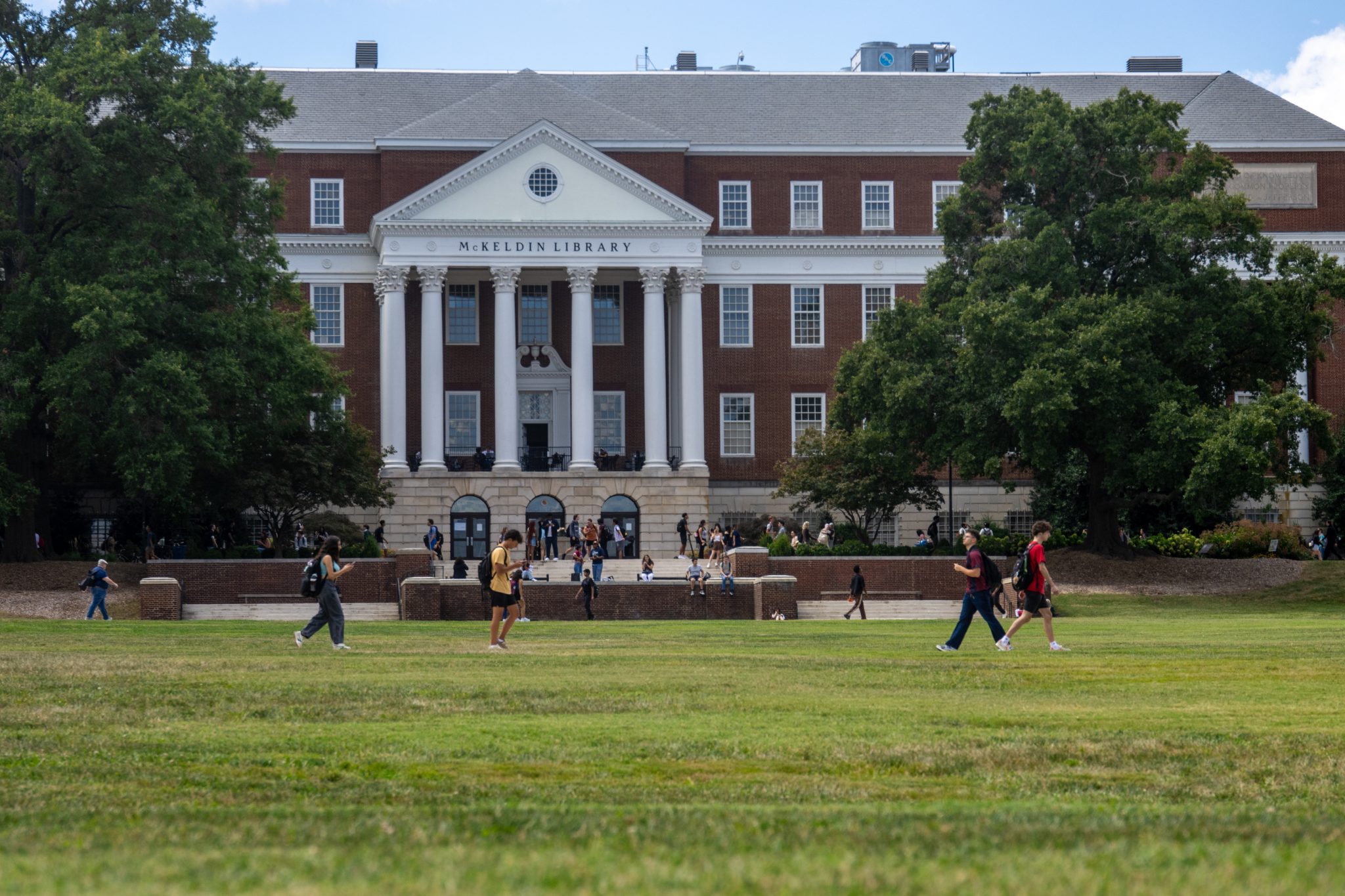
At the University of Maryland, enrollment in the arts and humanities college has declined 20 percent since 2018. Languages, literatures and cultures school enrollment is down 60 percent and American studies department enrollment is down 77 percent.
The crisis is not a hypothetical. It’s already here and if these fields keep shrinking at this rate, they will not come back.
To protect its humanities programs, this university needs to re-educate students on the importance of studying them in the first place.
Students and administrators have begun treating college like a transaction, picking majors based on which will give the biggest return on investment after graduation. Oftentimes, these majors are chosen without a genuine interest to learn them. This mindset has spread across the country, with several universities cutting humanities programs in favor of STEM ones.
Honestly, I get where the fear comes from. The cost of living and tuition have increased and many families are struggling financially in an economy predicted to potentially head into recession soon. In this environment, it might seem foolish to study something like anthropology or philosophy, because where is the money in that?
But that thinking misses the point. The value of the humanities is exactly what it sounds like, nestled in the ‘human’ part. This isn’t to say that those who study applied math or quantum physics are soulless and emotionless cogs in a machine. But they must recognize that history, linguistics and other humanities studies are also the glue that binds society together.
Without historians, we would not recognize the patterns of rising authoritarianism around the world. Without linguists, the infamous Unabomber case would never have been solved. Writing patterns revealed details about the suspect that many data analysts missed.
The decline of humanities tracks perfectly with the rise of political extremism in our country. When fewer people learn history or ethics, superficial headlines and conspiracy theories start going viral. Politicians begin to weaponize ignorance because it’s what sells and what gets them reelected.
And with the rise of AI, tech without ethics has created a dangerous precedent.
Elon Musk’s xAI chatbot, Grok, has recently come under fire for heavy political bias in its recounting of historical events. People consume this information and are left even more indoctrinated than before. It seems, funnily enough, that without valuing both humanities and STEM, America has slid into a media and civic crisis.
The problem deepens when humanities studies are associated with hyper-specific, design-your-own majors, like those at New York University’s Gallatin School of Individualized Study. The majors sound impressive, like one student who studied queer theory in Christianity, but they sound more like thesis themes than substantial degree paths.
These niche majors don’t help the humanities cause and result in people labeling all humanities degrees as unserious or impractical. The humanities stay credible when they emphasize strong foundations like communication, history and ethics. These are the skills that last and what universities should focus on if they want the programs to survive. Recently, the University of Arizona has tried to repair the collapse by creating an applied humanities major. Georgia Tech and Virginia Tech have done the same. These cross-field studies are a great way to encourage students to step out of a strict STEM-only path.
This university could take similar steps by integrating humanities courses into STEM programs, launching more combined majors and hosting cross-college initiatives that emphasize the need for educational diversity. I encourage students to call on the University Senate to commit to protecting humanities programs from future cuts.
We are living in an unsettling time. We need to reverse the decline in studying humanities. The real ‘return on investment’ doesn’t solely lie with coding apps or titrations in a lab. It lies also with learning how societies function, how to check power and how to stay unique in a generation pushed to follow the same path.
If we ignore this, we’re choosing a future where society can compute everything but understand nothing at the exact same time.
Arjun Bhide is a freshman government and politics major. He can be reached at abhide1@terpmail.umd.edu.