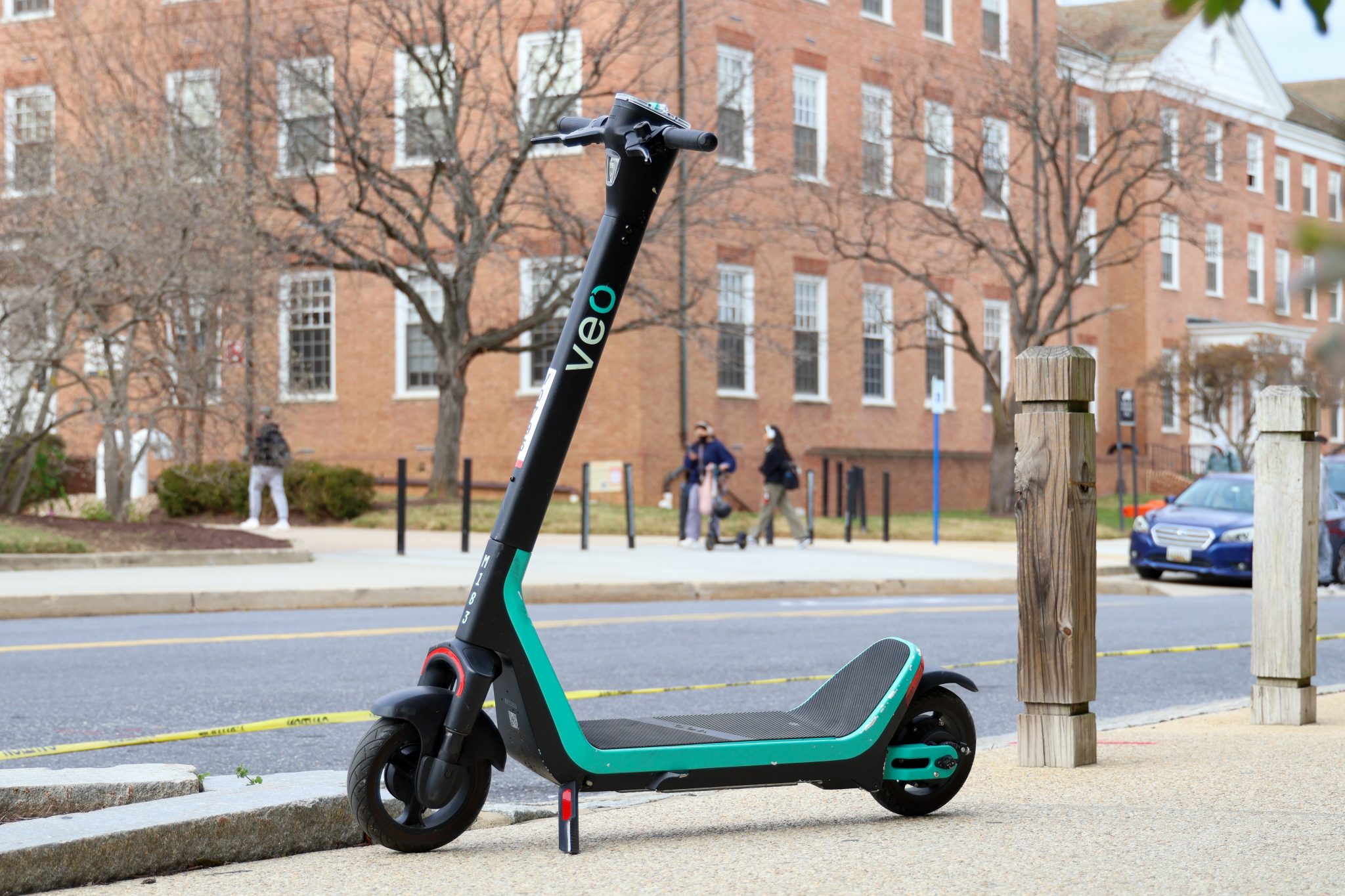
As Veo ridership increases in College Park, violations have hit an all-time high this fall.
City reports show that Veo’s fall ridership is up 62 percent from last year, while rider violations reached 305 in October.
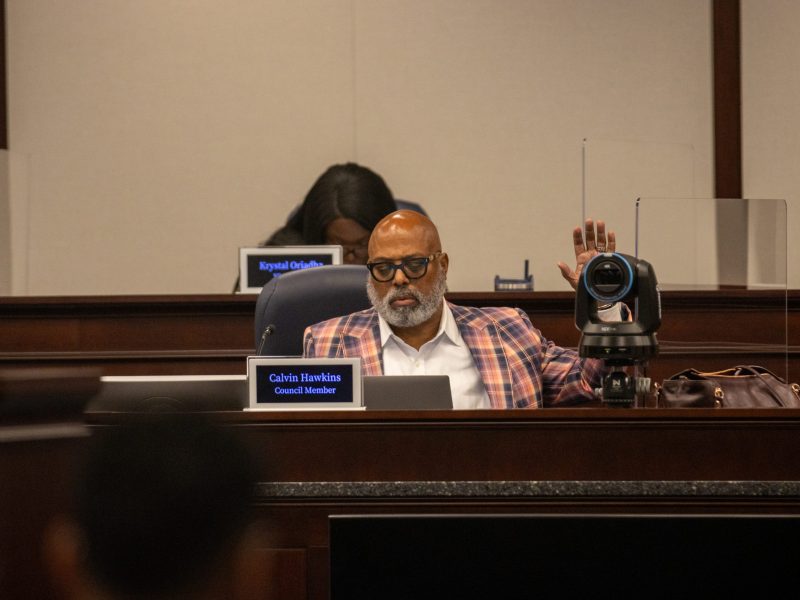
The increase raised enough concern within College Park that city officials asked Veo to appear before the city council Tuesday to address the micromobility company’s performance.
Veo, which launched its College Park pilot program in 2019, signed a renewal contract with the city in June. This allowed the company to expand its fleet from 400 to 650 vehicles, according to the contract.
This university also reported improper parking fees charged to Veo reached roughly $7,000 in October. This marks an increase from the campus’ typical monthly range of $200 to $500, according to the report.
Veo’s government partnerships director Jeff Hoover said improvements such as a longer battery range and membership that reduces costs for frequent riders could explain the increase in ridership this fall, in addition to the fleet expansion.
[College Park City Council extends curbside food scrap collection program]
This university banned personal electric scooters for on-campus residents in August, which is another likely factor for the increase in riders, District 2 council member Susan Whitney said.
Some council members said they’ve received numerous complaints from residents about Veo vehicles improperly parked around the city.
“We have several houses in North College Park where I get complaints on a regular basis that it seems as if these scooters weren’t being picked up,” District 1 council member Alan Hew said during Tuesday’s council meeting.
Veo adjusted its parking verification system in late October in response to performance issues like rising parking violations. The company began relying on an AI-based tool earlier this year that uses riders’ end-of-trip photos to determine if a scooter was parked correctly.
The system remains in place and is now combined with designated parking geofences that prevent riders from ending a trip outside approved zones.
Parking tickets from the city decreased from more than 100 the week of Oct. 17 to a little more than 20 the week of Oct. 24 after forced parking zones were implemented last month, the city report shows.
But Hoover said riders sometimes run out of funds or the scooters lose battery power mid-trip, causing rides to end in areas without designated parking.
[UMD students, landlords clash on proposed early lease ordinance]
He noted that Veo is also focusing on educating riders about correct parking through a pilot program launched in October. The program displays a pop-up in the app informing users that correct parking enters them into a weekly drawing for Veo credit, Hoover said.
The company also uses a tiered penalty system for improper parking. If a technician finds a scooter parked incorrectly and the rider-submitted photo confirms the violation, the rider receives a warning for the first offense and is fined for any following offenses.
District 3 council member Ray Ranker told The Diamondback the decline in violations after the addition of forced parking shows Veo is moving in the right direction. But he agrees with concerns about safety and improper parking.
“It does seem like their movement has been positive, but, again, they were here because it wasn’t great,” he said.
Mayor Fazlul Kabir said during the meeting he’s happy to have Veo in the city and is excited to see ridership increase.
Though micromobility aligns with the city’s strategic sustainability goal, he said he still has safety concerns.
“On one hand, we’re excited that the ridership has gone up, quite significantly,” Kabir said. “But with more scooters in the street, we’re seeing that it also increases the chance of accidents.”