On paper, it was a mismatch.
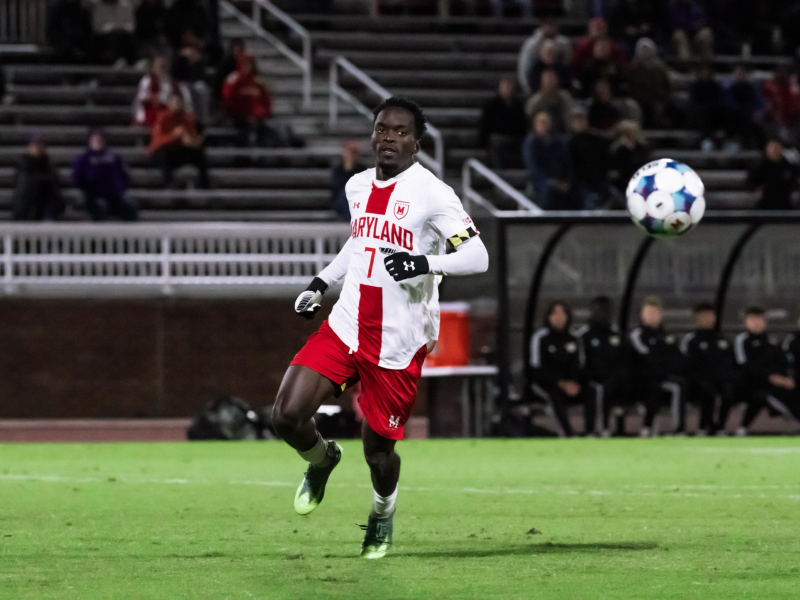
Undefeated No. 1 Maryland men’s soccer hosted 6-6-4 UCLA in front of a lively Ludwig Field crowd featuring its most spectators this season. The opposite Big Ten tournament semifinal was between Michigan and Washington, both of whom the Terps shutout during the regular season.
With the tournament played exclusively in College Park, it was Maryland’s to lose. But the Terps fell at the first hurdle.
Maryland’s Wednesday night 2-0 loss to the Bruins — who emphatically beat Michigan in Sunday’s Big Ten championship game — pushed the Terps out of contention for the NCAA tournament’s top overall seed.
Maryland was ultimately named the competition’s No. 4 seed. Although lower than where it’d like to place, the top ranking doesn’t guarantee a championship.
[No. 1 Maryland men’s soccer stunned 2-0 by UCLA in Big Ten tourney loss]
Pandemic-altered season aside, the NCAA tournament’s held the same format since 2003: 48 teams, with the top 16 seeded and possessing a first-round bye. In the 22 iterations since, the No. 1 team has won the national championship just twice — North Carolina’s 2011 title the most recent example.

Two and three seeds have actually been more successful, winning four national titles each.
Seeds four, six and seven have never produced men’s College Cup winners under the tournament’s modern setup. The same is true for seeds 12 through 15, though 16th-ranked teams boast two championships, while unseeded ones have combined for three.
Maryland won the national championship as the No. 1 seed in 2005. Its other two titles under coach Sasho Cirovski came as the No. 2 and No. 11 seeds in 2008 and 2018, respectively.
Missing on the top seed isn’t overly troubling for Maryland. As is the case with most single-elimination tournaments, rankings become virtually irrelevant.
Struggles on both ends of the pitch against UCLA
A few weeks ago, Cirovski said his goal is to have the Terps playing their best soccer entering the NCAA tournament. But the defensive stability that anchored Maryland’s success for much of the year has wavered lately.
After conceding nine goals across their first 14 matches, the Terps have allowed five in two games. A lackluster offense against UCLA contributed to some defensive lapses.
[4 stats that capture No. 1 Maryland men’s soccer dominant year]
The Terps grew restless after failing to convert for the match’s first 70 minutes. Several defensive players pushed higher up in an effort to support forward. But that left Maryland exposed on counterattacks, leading to both of the Bruins’ goals.
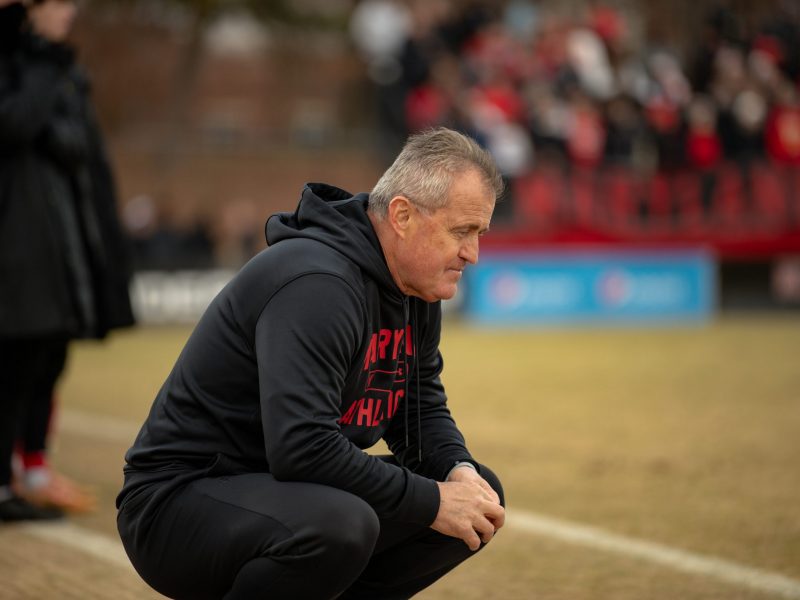
“We have a terrific team, but sometimes [when you’re] winning with young college players, you can get a little complacent in certain aspects of the game,” Cirovski said. “We [were maybe] trying to be a little too cute in certain areas.”
Missing out on the conference title match gives the Terps an extended break, though.
The Terps don’t play again until Sunday, when they’ll host either North Carolina or North Florida. The 10-day hiatus is the team’s longest stretch without a match this season.
That time off should benefit Maryland’s moderately taxed back line.
Center backs Lasse Kelp and Tristen Rose remain the Terps’ only non-goalkeepers to have played every minute this season. Starting right back Jace Clark also left Wednesday’s semifinal with an injury.
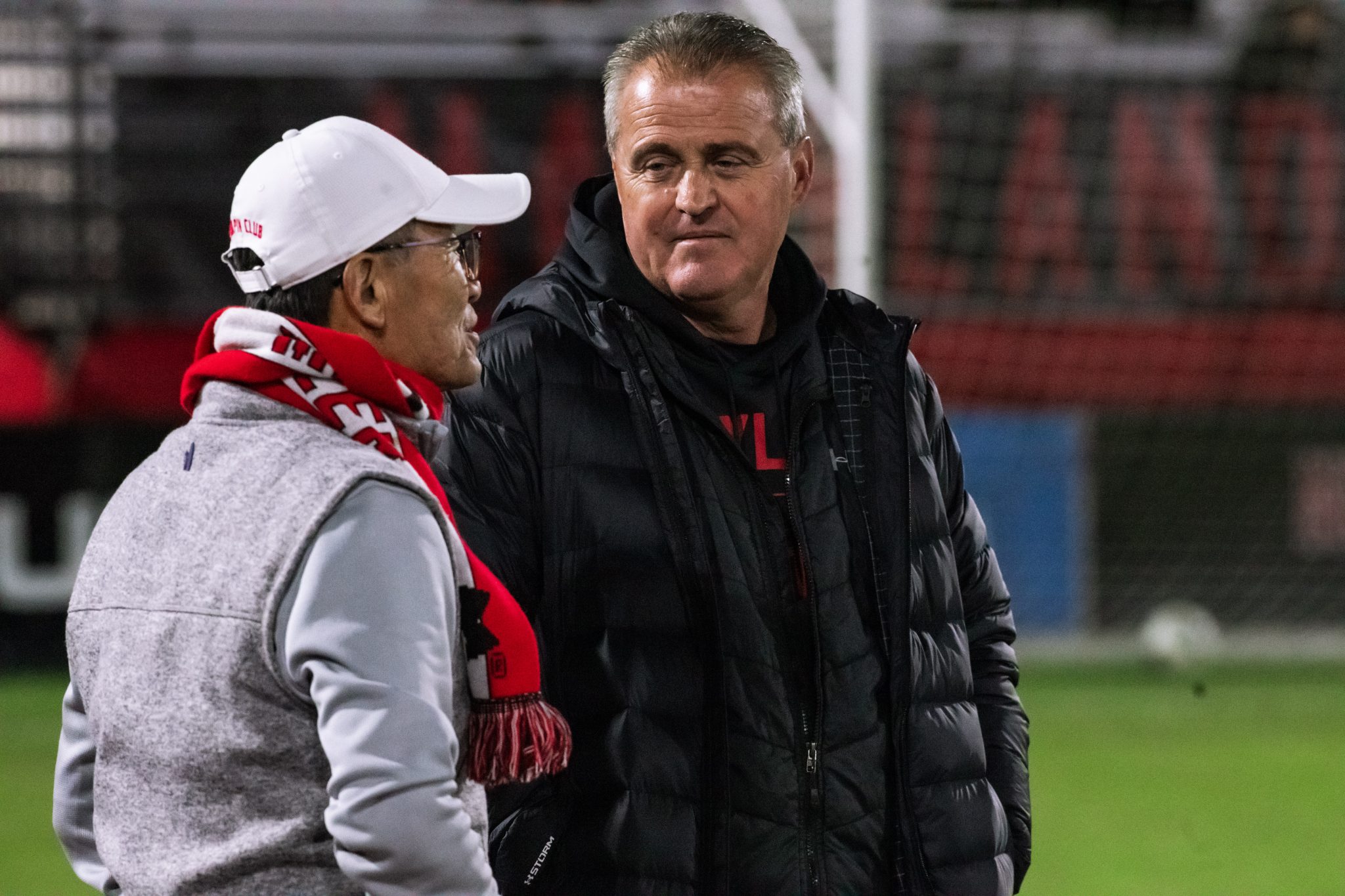
With the postseason looming, Cirovski is looking to his veteran team captains — Kelp, Chris Steinleitner and Luca Costabile — who all happen to be defensive players. He spoke with that trio for additional time after vehemently addressing the entire team after Wednesday’s loss.
“We talked to them a little bit about making sure they are continuing with the message that we shared after the game,” Cirovski said. “We [want to] take this game, and this moment … and come out of it better on the other side.”