Views expressed in opinion columns are the author’s own.
As a South Asian student who celebrates Diwali, I find it odd that the University of Maryland still does not recognize this important cultural and religious festival as a university holiday.
Each fall, while millions around the world gather to celebrate the festival of lights for five days, students like me are often forced to choose between participating in deeply meaningful family traditions and keeping up with academic demands.
Personally, I was frustrated that I couldn’t go back home for Diwali because of an exam the next day. While my family lit diyas and gathered around for prayer, I had to FaceTime them from the desk in my dorm. It was a stark reminder that not all traditions receive the same recognition on campus.
Diwali is a symbol of light and good conquering darkness and evil. Its themes of hope, renewal and community are universally celebrated by Hindus, Jains, Sikhs and Buddhists. Yet at this university, where diversity is often highlighted as a strong core value, the absence of recognition for one of the most widely celebrated holidays in the world feels inconsistent with the university’s stated commitment to inclusion.
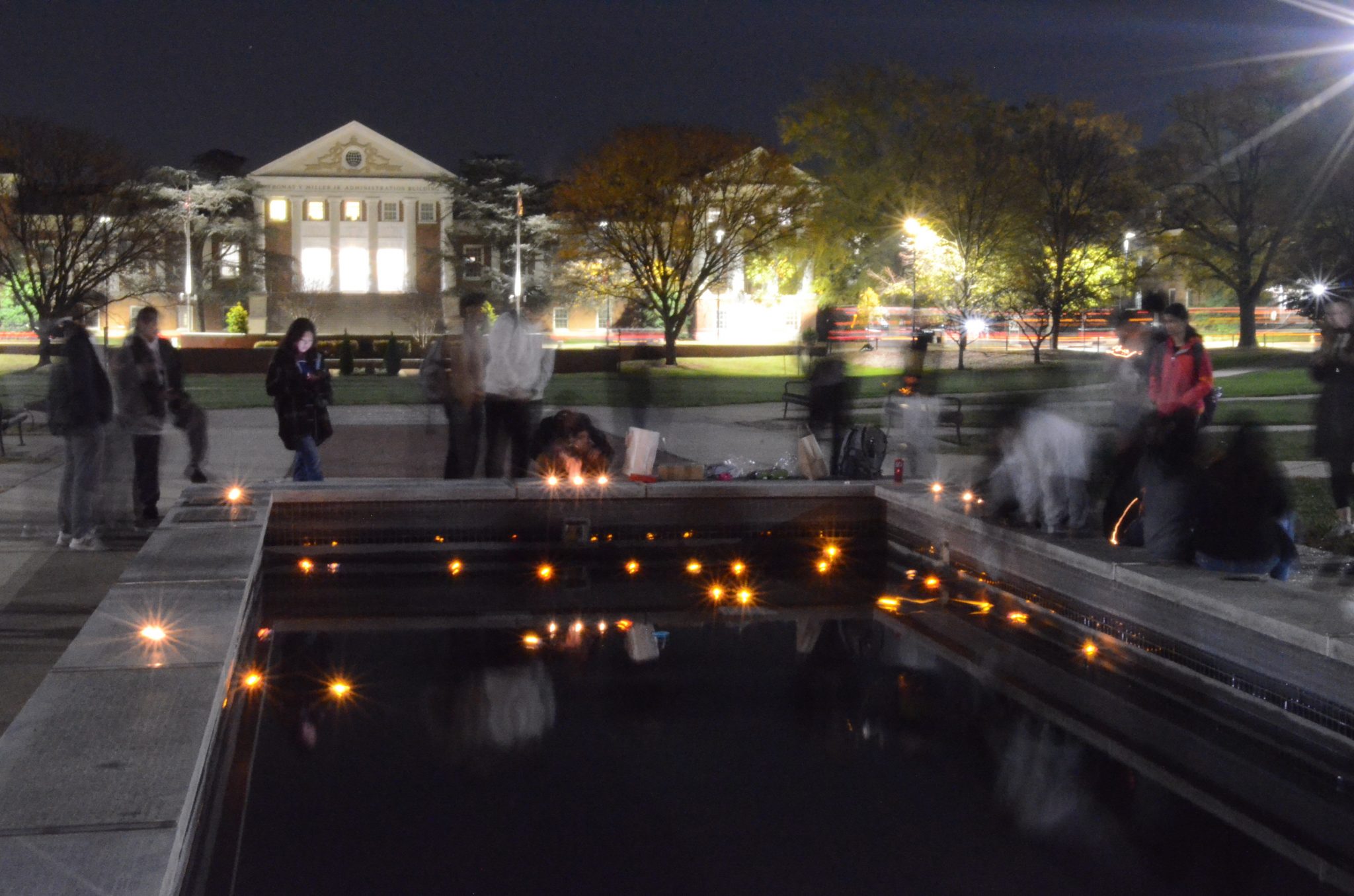
For many, Diwali is not just a festival but a season of renewal, gratitude and togetherness. Families clean and decorate their homes, light rows of oil lamps and share sweets with their neighbors and their friends. The celebration spans several days, each with its own traditions. Much like Yom Kippur and Christmas, Diwali is a time for spiritual reflection and community connection, bringing loved ones together across generations. Diwali’s observance is woven into the cultural fabric of more than a billion people around the world, making it one of the most significant and unifying holidays to exist.
Other major religious observances receive formal recognition in the academic calendar and align with our breaks. The university’s winter break aligns with Hanukkah, Shabbat, Winter Solstice/Yule, Christmas and Kwanzaa. The university also formally recognizes Martin Luther King Jr. Day. These precedents show that the university can and does make space for significant observances. If this is the case, why can’t the university align at least one of its breaks with Diwali?
To make this happen, this university could choose to align its recently instated fall break with the week of Diwali, which takes place between October and November, ensuring at least one of the five days of the festival is observed by the university. This would allow the university to accommodate students’ observances without extending the academic calendar or disrupting course schedules. It would also be more meaningful than continuing to anchor fall break around Columbus Day, a holiday widely acknowledged as controversial.
But beyond logistics, this decision is fundamentally about values. For many South Asian students, Diwali represents connection, reflection and belonging. When universities acknowledge such traditions, they affirm that all students deserve to see their identities reflected in campus life. Recognition makes students feel that their culture belongs here too.
In a time when universities across the nation are grappling with political pressure to scale back diversity, equity and inclusion initiatives, this university has the perfect opportunity to lead by example. The recent renaming of diversity, equity and inclusion offices and national rhetoric questioning their very purposes makes it critical for this university to reaffirm its principles and values through action.
Recognizing Diwali in the academic calendar would send a clear message that this university’s commitment to diversity is not performative but principled. Standing firm in our values of empathy, equity and belonging is how Maryland can light the way forward.
Srijani Chakraborty is a sophomore bioengineering student. She can be reached at schak19@terpmail.umd.edu.