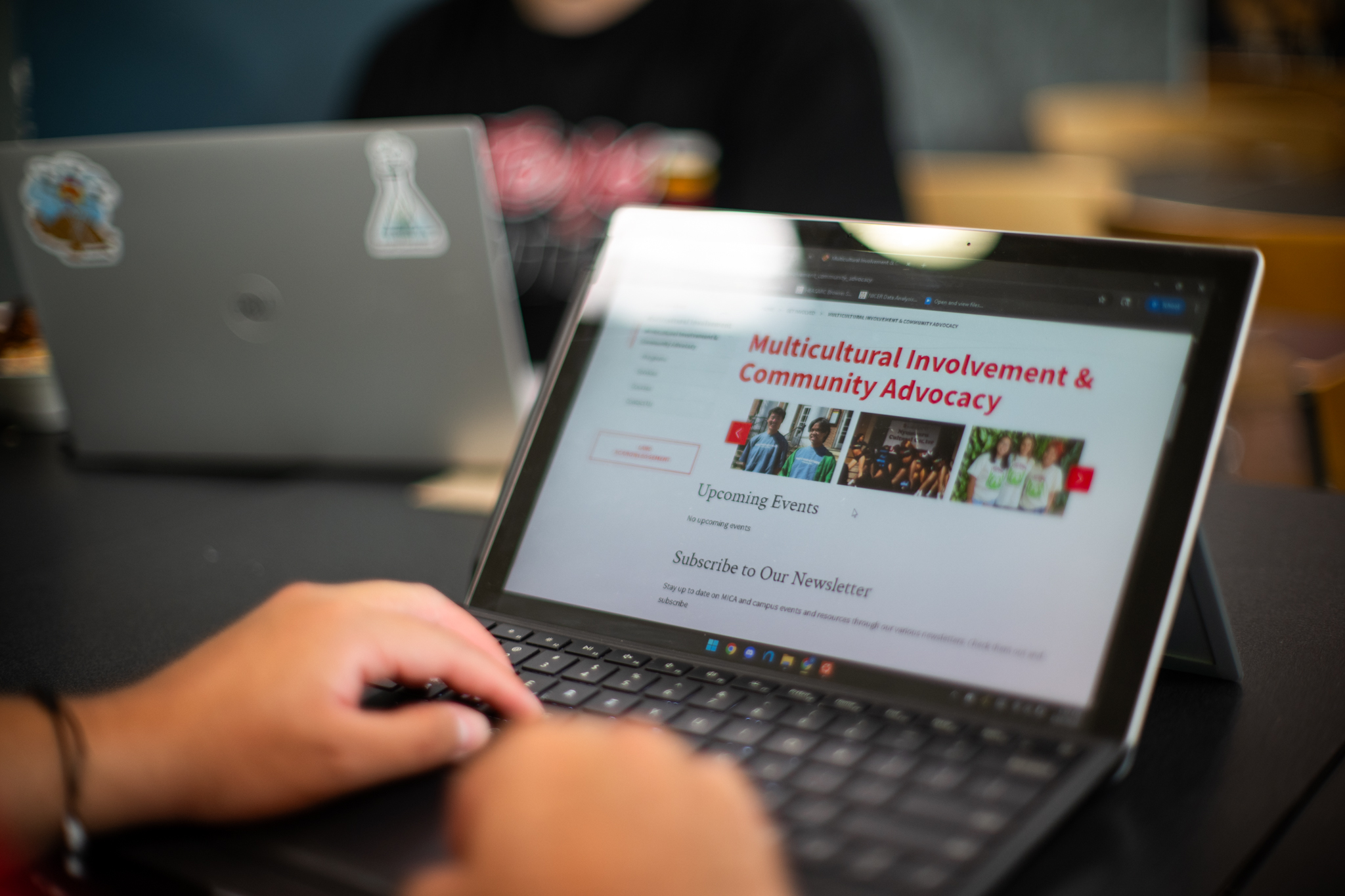
Some University of Maryland’s websites related to diversity, equity and inclusion initiatives have undergone changes in the past few months, and the Multicultural Involvement and Community Advocacy office’s is no exception.
The office is operated through Stamp Student Union and aims to educate students about disability, ethnicity, race, sexual orientation, gender and religion with programs and cultural events. The office’s homepage has been reduced to four main sections for programs, services, courses and contacts.
It used to have a sidebar with a dozen sections about the office and how to get involved with different cultural communities on campus. Some information has been lost along the way or proved more difficult to find.
The office’s webpage was updated right before the start of the semester “to better organize and align information accordingly,” this university wrote in a statement to The Diamondback Tuesday.
“The university continually evolves to ensure our services remain responsive and effective for all students,” the statement read.
[UMD students demand transparency on removed immigrant, undocumented resources webpage]
An archived version of the office’s webpage dated Aug. 4 shows the home screen used to display an “About Us” blurb at the top explaining its work and an “About MICA” tab on the sidebar.
The office supports and advocates for campus’ historically marginalized communities by providing opportunities and spaces that affirm identities, build inclusive communities among diverse members and create social change – locally, nationally and globally,” the webpage formerly read.
The webpage also used to contain links to a number of student involvement programs on its home screen, including Asian, Pacific Islander and Desi American Student involvement, Black Student involvement and Latinx Student involvement, according to the archives.
Now, the homepage lacks an “About Us” section and any mention of the student involvement programs.
The current and archived versions of the homepage include a description of the office’s mission. But the updated version is shorter compared to the original and contains almost none of the same text.
The old blurb emphasized the office’s commitment to “diversity, multiculturalism, and social justice,” according to the archives.
“We advance a purposeful campus climate that capitalizes on the educational benefits of diversity, through student-centered advising, advocacy, programs, research, and practices,” the webpage formerly read.
Now, the mission statement has been cut down to two sentences and does not use the word diversity.
Many university and government webpages across the United States have been scrubbed of language and resources related to diversity, equity and inclusion in response to pressure from President Donald Trump’s administration to eliminate such programs.
[‘Conceding to the pressures’: UMD students criticize DEI office’s renaming]
This university’s Office of Diversity and Inclusion also changed its name to the Belonging and Community office in August.
“It seems as though they’re trying to kind of fly under the radar, not make themselves a target for federal pushback,” said lynne homann cure, the treasurer of this university’s Young Democratic Socialists of America chapter.
These changes “throw some of the most vulnerable members of our campus community under the bus,” the junior math major said.
The association recently started a sanctuary campus campaign calling on this university to reinstate its Immigrant and Undocumented Student Life office’s webpage, another online resource that was taken down over the summer, The Diamondback reported last week.
The campaign, which also demands the university refuse compliance with U.S. Immigration and Customs Enforcement, has collected nearly 2,000 signatures as of Wednesday.
Other university webpages under construction as of Wednesday include one dedicated to the Office of Multi-ethnic Student Education and one that previously listed 25 student demands created by Black student leaders in 2020.
“They’re continuing to take things down, reshuffle things in confusing ways, then not announce when those changes are made,” homann cure said.
University president Darryll Pines told The Diamondback on Wednesday that these changes are not campus level decisions. Instead, they are often made at the local level by staff in the student affairs division or offices, Pines said.
When students click on the programs tab on the office’s webpage, a drop-down menu displaying four additional items appears. It hosts links to information about heritage months, inclusive language and the office’s casual lunch events for community members to talk and give presentation on topics related to the office’s programs, according to the most updated version of the webpage.
The fourth item listed under the programs section explains a spoken word experience course called TOTUS. The page for TOTUS also displays what is supposed to be a video related to the course, but it is unavailable for viewing.
The office will continue to sponsor heritage and history month events and support student programs developed in planning committees, this university wrote in its statement Tuesday.
“Our commitment to supporting all student communities remains steadfast,” the statement read.
Assistant news editor and administration reporter Sam Gauntt contributed reporting.