Last week I attended the first installment of the Provost’s Conversations on Diversity, Democracy and Higher Education. The speaker was professor and author James Loewen, who spoke about “sundown towns.” These were places across the country where blacks were prevented from living in or passing through at night.
Blacks were barred from buying property and living in these communities, and even those who had jobs during the day had to leave the city limits after dark. These restrictions were enforced not only by legal measures, but also through violence and intimidation.
It was a great talk, and I encourage you to seek out this series of Provost’s Conversations. One aspect of the talk that I appreciated was how Loewen made an effort to tailor his talk to the university community. In fact, a comment he made about university subcultures, a side note to his larger discussion of race and racism, stayed with me as I biked away from the Stamp Student Union.
Loewen, a sociologist by training, suggested that within every university, there are four subcultures. Different schools have a different mixture of these subcultures, and there is no “right” or “best” combination which would produce an ideal institution. At the same time, Loewen suggested, it may be worthwhile to consider the balance between the four and wonder if university life might be improved by ensuring that each subculture has a chance to thrive.
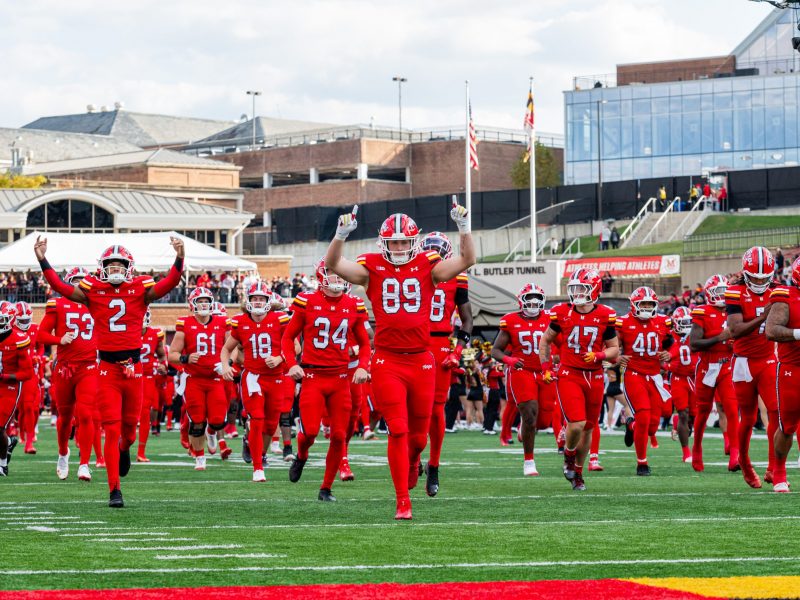
The first subculture, Loewen said, is the “collegiate.” These are the folks who are gung-ho about being students here at the university. We root hard for the Terps, we wear our Greek letters with pride and we throw ourselves into clubs and activities. In Loewen’s view, this is the dominant subculture at this particular university.
The second subculture is the “vocational.” These are students who are single-minded about getting their credential and using it in their chosen profession. In a sense, people in this subculture have one eye on life after college, an attitude which drives the way they approach university life.
The third subculture is the “non-conformist.” This refers to devotion to anything outside the mainstream. Left- or right-wing political zealotry, immersion in an alternative music scene, thousands of hours online spent playing World of Warcraft – these are just some examples of how some students cultivate the non-conformist subculture.
Finally, there is the “intellectual” subculture. These are the people on the campus who are interested in knowledge for knowledge’s sake. These folks enjoy considering various ideas, and they are genuinely intrigued by whatever they read and discuss in class.
It’s important to realize that you, as an individual, can be part of more than one of these subcultures. You can have a foot both in the collegiate as well as in the intellectual. You can be vocationally minded because you want to graduate and protect the environment, but also something of a non-conformist when it comes to your vegetarianism.
I suspect that Loewen is probably right when he speculates that the collegiate subculture is dominant here. I do my part to support this subculture when basketball season comes around. Still, I might suggest that you consider these four subcultures and ask yourself whether any one of them is under- or over-represented in your own life. The proper balance between them will differ from person to person, but we all need a little bit of each.
Jeremy Sullivan is a doctoral candidate studying American history. He can be reached at sullivandbk@gmail.com