Nobody expected Rise of the Planet of the Apes, a ridiculously titled reboot to a long-stagnant franchise, to be good. Even fewer people expected Dawn of the Planet of the Apes, the sequel with an equally ridiculous title, to be as good or better.
And yet, here we are. Dawn of the Planet of the Apes has captured lightning in a bottle again, proving once and for all that Planet of the Apes is back.
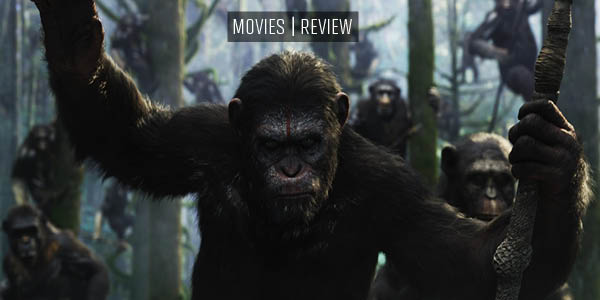
The sequel picks up roughly 10 years after the devastating epidemic implied by the ending of Rise of the Planet of the Apes. Caesar (Andy Serkis, The Hobbit: An Unexpected Journey) and his gang of hyper-intelligent apes have carved out a happy little home in the Californian forest, complete with an educational system and war paint.
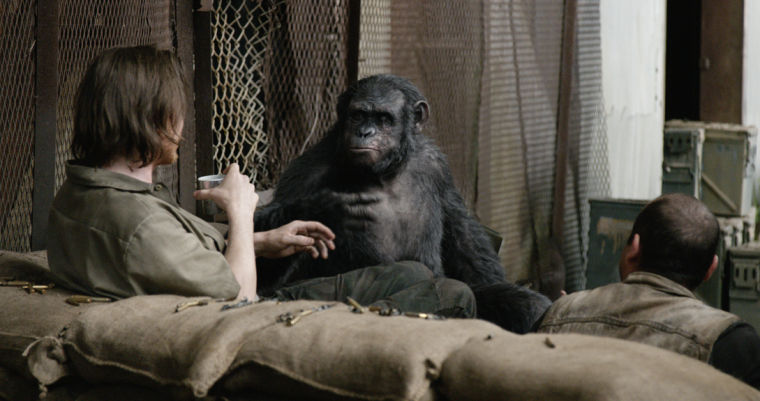
Things continue swimmingly until some of the apes accidentally stumble upon a group of human survivors in San Francisco desperate for electricity and armed to the teeth. After a series of tragic misunderstandings, Caesar finds himself unwillingly thrust into a war against the surviving humans.
Surprisingly but gratifyingly, Dawn of the Planet of the Apes manages to avoid the inherent fatalistic trap of its premise. Anyone who has watched the original Planet of the Apes or looked at the unwieldy title already knows how the movie’s going to end. Yet, instead of robbing the film of dramatic tension, the inevitability of it all lends a sense of tragic grandeur to the proceedings, elevating the human-and-ape drama to the level of a Greek tragedy.

Dawn of the Planet of the Apes
The writers, Rise of the Planet of the Apes veterans Amanda Silver and Rick Jaffa along with The Wolverine scribe Mark Bomback, have turned in a remarkably somber and thoughtful story that feels more like a drama than an action spectacle.
In fact, Dawn of the Planet of the Apes is probably the least campy Planet of the Apes flick ever, the first in which the expressive motion-capture work has gotten good enough for audiences to easily suspend disbelief and in which moments of cheesy in-jokes have been reduced to soundtrack cues.
Matt Reeves (Let Me In) shoots the film with competence and restraint, save for a few bombastic compositions during the equally bombastic climax. Dawn of the Planet of the Apes, unlike much of its blockbuster brethren, is a film that favors longer takes and less distracting camera movement, a refreshing change of pace even if some gratuitous 3-D and spotty CG mar certain moments.
Dawn of the Planet of the Apes does have its share of flaws. The story, though genuinely interesting, is held back by a merely functional script that relies far too heavily on assholes being assholes for the sake of being assholes. The film also lacks the substance to fully justify its two–hour-plus runtime
These, however, are only surface-level blemishes to an otherwise sterling summer blockbuster. In the wake of Transformers’ wretchedly low-brow excess, it’s heartening to see that there’s still a place for pathos in the middle of blockbuster season.