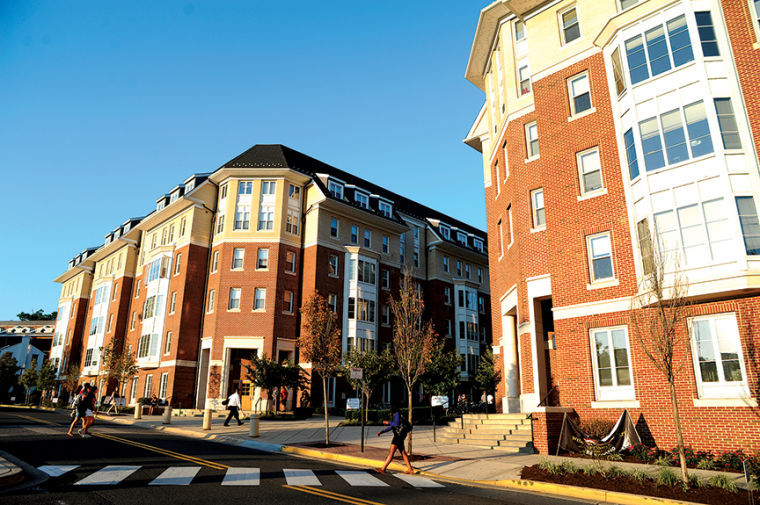

South Campus Commons 5 and 6
Student interest in mixed-gender housing is growing, a Department of Resident Life survey found, and officials are optimistic about continuing to expand gender-inclusive housing opportunities for the 2014-15 school year.
The university’s gender-inclusive housing task force fall survey found 97 percent of responding students living in mixed-gender or gender-inclusive housing would recommend the housing option to others. Additionally, 87 percent of the 310 students who responded said their needs were met and the RAs were supportive and inclusive of different genders in mixed-gender units. Students also reported they felt comfortable about the perception of such housing arrangements, with 94 percent reporting they have not faced harassment, despite previous concerns from officials and students.
Mixed-gender floors alternate rooms for men and women while gender-inclusive housing allows students to live in the same unit regardless of gender and sex.
Officials interpreted the survey results as a sign that current initiatives are working and as a green light for undertaking several new initiatives, including the expansion of mixed-gender housing and offering online information sessions for mixed-gender groups through the room selection process.
“We had done training with the RAs to help them create a welcoming environment on the floor,” said Amy Martin, Resident Life associate director.
Results also indicated 60 percent of responding students developed a better sense of belonging on the campus and 63 percent of respondents felt more comfortable in their current housing option than they would have in single-gender housing.
The task force was a major part of the gender-inclusive housing initiative from the start. Mixed-gender and gender-inclusive housing began in South Campus Commons and Courtyards apartments and expanded to the dorms. A pilot program for gender-inclusive housing in dorms began this year. The gender-inclusive housing committee checked in on the students living in these housing options through the task force, using the data collected to compile a report and recommendations.
Now, aided by the task force’s research, the gender-inclusive housing committee plans to offer mixed-gender housing in the Ellicott and Denton communities.
“Right now, the mixed-gender housing in the Cambridge Community and Carroll and Caroline [Halls] has not served all of our living-learning program and nonliving-learning program students,” Martin said. “So we’re looking at expanding to basically one floor in each of the buildings in the Ellicott and Denton communities.”
That would put 527 beds on mixed-gender floors in six dorms on the campus. Prince Frederick Hall will also become a mixed-gender and gender-inclusive housing option when it opens next fall.
With more housing options, the committee will also look to make the information sessions mandatory for students in mixed-gender housing groups online. Students previously had to attend formal in-person meetings.
The task force’s research also found this university is ahead of its peers for diverse housing options, standing out for its methods of offering gender-inclusive housing.
“What’s unique about us is that we are not holding out spaces for gender-inclusive housing,” Martin said. “My sense is what’s happening on most campuses is that they are designating a certain number of spaces in apartment areas that students who need gender-inclusive housing apply for or call the housing office to get access to them, but we are offering gender-inclusive housing for returning students through our regular room-selection process.”
Resident Life will continue to assist the committee in its efforts to improve housing options for students, said Deb Grandner, Resident Life director, adding she would “absolutely” support the committee’s proposals.
“I’m very proud of the work of the gender-inclusive housing committee and of the actions that we’re taking as a campus to support our LGBTQ students,” Grandner said.