
Michael Bay tries his hand at “personal” filmmaking, and while it’s still pretty ridiculous, it actually mostly works.
At some point during his career — perhaps right at the beginning — director Michael Bay (Transformers: Dark of the Moon) stopped being a man and became a style unto himself.
Sure, his films generate big bucks for studios, but any specific item in his catalog generally isn’t the first thing that comes to mind when he’s mentioned. Instead, the Bay name dredges up hazy memories of orange camera filters, visceral battles, nearly nude supermodels and, of course, a never-ending barrage of explosions.
Although it can be seen as a departure from his other works, Pain & Gain, Bay’s newest film, is basically yet another foray into the same grandiose cinematic world.
Don’t get me wrong — while the Bay style may be responsible for many of the film’s shortcomings, it also plays a role in making Pain & Gain an absolute blast.
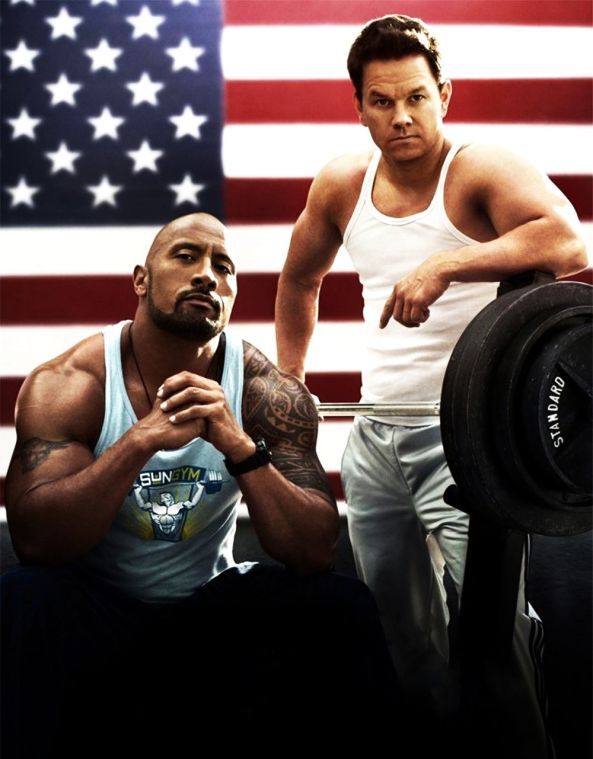
The film is a retelling of the ridiculous true story of a trio of meathead bodybuilders who decide the best way to get rich is by kidnapping and extorting their wealthy clientele.
Things quickly get out of hand, and the trio’s members suddenly find their plans crumbling around them in a hail of violence. As events unfold, it becomes clear the protagonists are horrible people, and yet the film manages to turn the vast majority of their sickening actions into laughable, if disturbing, shenanigans.
Before seeing Pain & Gain, it was hard to imagine Bay successfully helming an R-rated pitch-black comedy of this sort. By turns brutal, laugh-out-loud funny and incredibly daft, there’s something all too fitting about Bay’s overblown storytelling and the utter improbability of events in the movie.
Still, Bay seems to have no control over the bombast he embodies. While much of the movie excels under Bay’s direction — try not to laugh excitedly and be disgusted at the same time during a botched bank robbery in act two — there are plenty of moments when he crams flashy camera work, tricky editing and odd narrative conceits down viewers’ throats at the expense of quality.
For instance, the poorly paced opening 20 minutes of the film are devoted to Daniel Lugo (Mark Wahlberg, Broken City), who acts as a narrator and central character. Yet as the film goes on, at least five characters are given persistent ,omnipresent vocal soliloquies, purely for a few jokes and storytelling maneuvers.
The choice is bewildering and, like many of Bay’s stylistic touches, confuse the proceedings without adding to the film.
Similarly, the musical score in Pain & Gain makes no sense, jumping between modern electronic music and almost universally out-of-place, dramatic orchestral swells that drown many comedic scenes in uncomfortable melodrama.
For a movie set in the early 1990s and helmed by a director who still crafts all of his films like ostentatious music videos from the same era, why don’t we get a relevant batch of ’90s anthems?
Even so, it’s easy to look past these missteps and realize that Pain & Gain is still a good movie despite its flaws.
It doesn’t hurt that Wahlberg and Tony Shalhoub (Cars 2) both deliver fantastic (and funny) performances as the dirty rotten scum of Miami, propelling Pain & Gain through some of Bay’s more distracting moments.
The standout, however shocking, is Dwayne Johnson (G.I. Joe: Retaliation), who proves once and for all he actually has range as an actor, jumping from lovable tough guy to devout Christian to angry cocaine addict.
Maybe his acting isn’t perfect, but the palpable idiocy he infuses in his character steals the show.
But every actor is fighting against Bay — and at the end of the day, Pain & Gain is all about that Bay style, for better and for worse.
Try as he might to take an already fantastic real-life story and dilute it with his often overbearing cinematic eye, in Pain & Gain still has enough substance to accompany its style.
It also just might be the best film in Bay’s catalogue to date.
diversionsdbk@gmail.com


