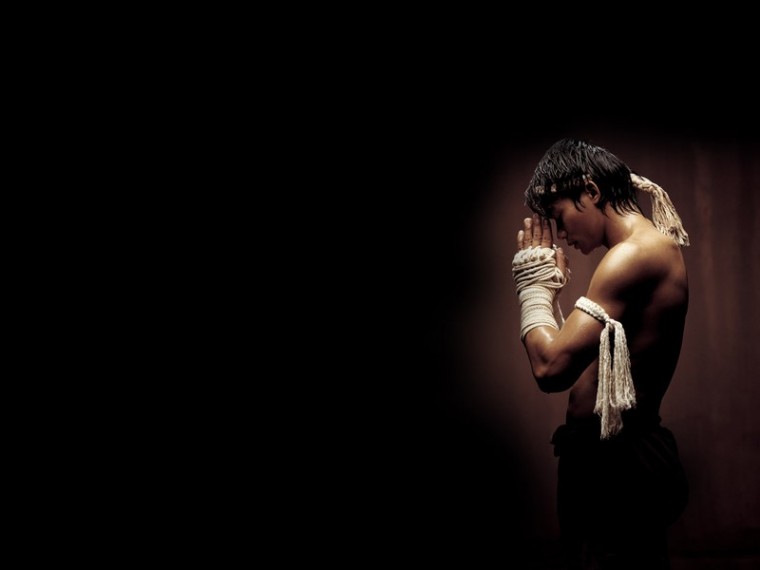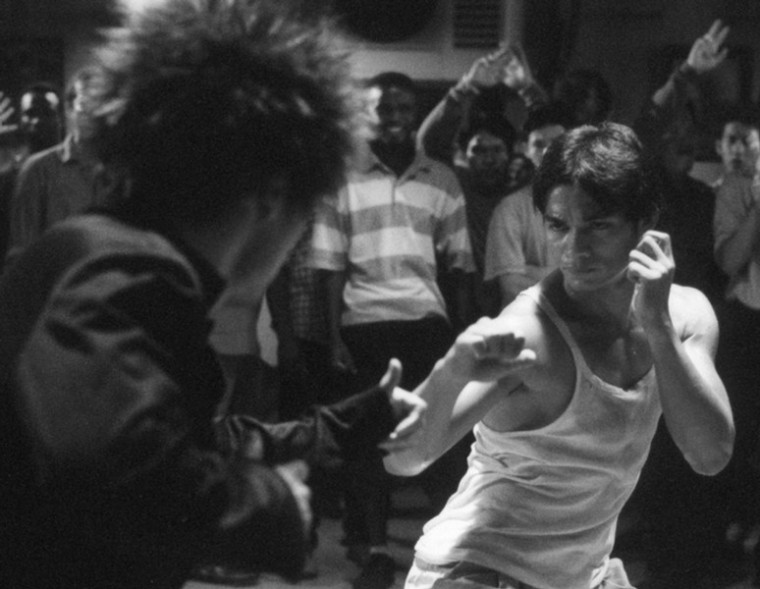
If you’ve ever seen old Tasmanian Devil cartoons, you’ve got a pretty good idea of how Tony Jaa fights. He’ll zoom across the screen like a whirling dervish, the occasional foot or fist emerging from his mini cyclone just in time to knock his adversary upside the head.
Or when punches and kicks just won’t get it done, Jaa uses a devastating array of elbows and knees, as is customary in muay thai, the ancient blend of kickboxing and martial arts he studies. Simply put, if 50 Cent called Jaa a wanksta, he’d be sipping his Hennessy — along with his breakfast, lunch and dinner — through a straw.
Bottom line: Go against Jaa and you’ll be devoured.
That is, unless you happen to be a tiny, complimentary ham and cheese sandwich at Melrose Hotel in the heart of Washington. In that case, you’re safe. Jaa wouldn’t dare eat in the presence of guests out of fear of being impolite, no matter how hungry or exhausted he gets from a day of doing the press rounds.
Even after the worldwide success of his first film, Ong-bak: The Thai Warrior, Jaa greets fans and reporters with a slight bow. Though no doubt more at ease in a dojo with tassels dangling from his biceps and sweat dripping past his nostrils, Jaa fields half-baked or repetitive questions with a manor befitting his humble beginnings in northeastern Thailand.
It was there, in the small hamlet of Surin, that Jaa honed his skills in the art of muay thai with his father, an elephant trainer. Jaa would hurtle over the elephants while they played in the water, developing his incredible agility at a young age.
Jaa’s longing to be a champion kickboxer morphed into a desire to become a film star when he turned 10 and began watching any and all martial arts films he could get his hands on.
“I never choose which movies I want to see; I just watch them all,” he says in Thai, while an interpreter translates. “Of course, my inspiration comes from Bruce Lee, Jackie Chan, Jet Li and Panna [Rittikrai], and I regard all of them as my masters.”
Panna, a Thai director, screenwriter and stuntman, took the teenage Jaa as his protégé and taught him how to maneuver the film world. Before Jaa got his big break, he worked as a stuntman, most notably in the film Mortal Kombat: Annihilation, where he performed the stunts for lead character Liu Kang (Robin Shou).
But nothing could have prepared Jaa for the popularity of Ong-bak, the cutting edge martial arts movie in which he performed his own stunts, using no wires or special effects.
“My success in Thailand was enough for me; I never thought that it would be successful in Asia, Europe and now America. It’s beyond my wildest dreams. And coming from a small country, to be able to show people here the Thai culture, that was my biggest goal,” says an enthused Jaa, motioning with his hands like an excited Italian grandmother as he speaks.
Don’t expect Jaa’s newfound celebrity status to turn him flabby anytime soon. Content but never complacent, Jaa works out eight hours a day, six days a week, to maintain a body that would make self-proclaimed fitness celebrity John Basedow jealous.
“Everywhere can be a place of practice. Like in my [hotel] bedroom, I can walk on my hands to the bathroom, or do other stuff just to warm up,” says Jaa, who admits KFC is an occasional fast food indulgence. “It’s about keeping balance … if I feel my muscles are sore and I’m tired, I’ll go get in touch with nature, meditate or go sing karaoke.”
And though he harbors an obvious disdain for martial arts films that use wires or special effects (Keanu Reeves can’t really move like Jackie Chan), Jaa keeps up an impenetrable façade of respect for other filmmakers. “Using wires is also an art that many artists choose to use, and viewers may consider watching these films, but I can do these tricks on my own, so why not present something different?” Jaa says.
With critics heaping praise — “the next Bruce Lee” — on a daily basis, it’s only natural he would begin to develop a celebrity fan base. Jackie Chan and Quentin Tarantino have both lauded his abilities, while the Wu-Tang Clan’s chief producer RZA has even begun to appear in TV commercials praising the film and its star.
“First I didn’t know [RZA], but when I heard he was a big fan of the movie, and I found out he had composed the soundtrack for Kill Bill, I really appreciated him and was happy that he liked the movie,” says Jaa.
But while it’s nice to hear his name mentioned with some of the greatest action stars of all time, Jaa maintains a special sense of identity: “I never dare compare myself to them. There’s only one Bruce Lee in the world, there’s only one Jackie Chan in the world, there’s only one Jet Li in the world and there’s only one Tony Jaa in the world.”
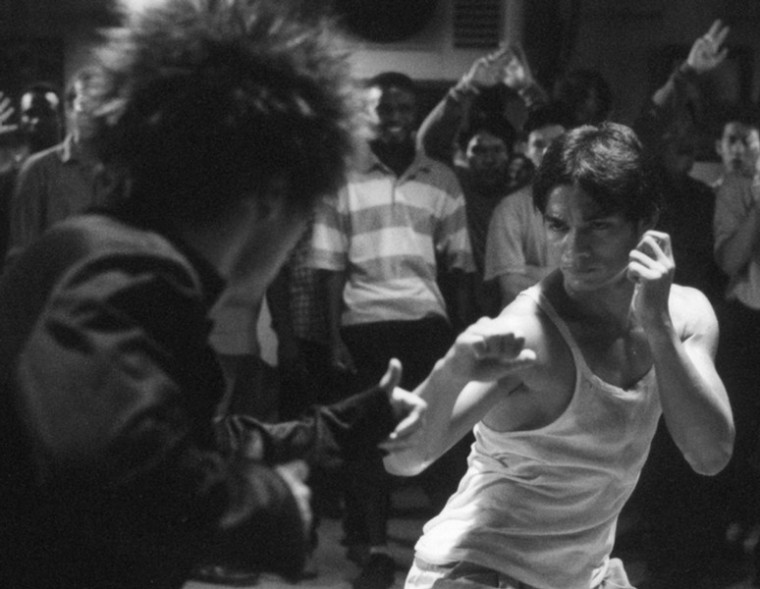
Tony Jaa (right) is creating a buzz across the globe with his skills in the Thai-produced action film Ong Bak.