CAPE CANAVERAL AIR FORCE STATION , Fla. – The rockets drowned out all sound in a radius of at least a mile and a half, but one message was clear: Deep Impact is space borne.
A Boeing Delta II expendable rocket carrying the mission’s spacecraft took off at 1:47 p.m. today while members of the Deep Impact team, headed by University Professor Michael A’Hearn, and media stood in awe at a press site 1.4 miles away.
With less than 60 seconds left in the countdown, university associate professor of astronomy and Deep Impact science team member Lucy McFadden was giddy with excitement, biting her bottom lip in anticipation.
The $313 million NASA project is the first to punch a hole in a comet to study its interior. It has been in the works for the past six years.
When the countdown reached zero, an anticlimactic puff of smoke spat from the base of the rocket, accompanied by a low thundering rumble. In seconds, the puff of smoke grew into a massive ground-level cloud enveloping the rocket itself and the rumble grew into a deafening roar.
The crowd of about 40 at the press site went silent; only the rapid clicks and whirs of cameras were audible before the rocket’s roar climaxed, drowning out all sound.
“I wasn’t thinking anything” during the launch, McFadden said. “I was screaming – screaming! I could feel the tears coming. It was just unbelievable.”
The rocket, lifting off slowly at first, rose out of the white cloud with smoke in its wake. A shaft of what appeared to be black light streaked from the rocket’s path to the ground-the rocket’s shadow.
High in the sky, the ring of smaller rockets peeled off the main rocket’s base, creating several smoke trails before disappearing out of sight.
Weather was the only major variable NASA officials foresaw interfering with the launch schedule -which changed at least three times in the past month. Though the skies were sunny and mostly free of clouds, weather balloons reported high winds, concerning launch officials.
With about 20 minutes to launch, NASA officials announced that the wind would only affect the rocket’s flight, not its launch.
In space, the rocket deployed the automobile-sized mission spacecraft, which began its 6-month journey into the path of comet Tempel I.
In the final 24 hours before impact, the spacecraft will separate into an impactor and a flyby. On July 4, Tempel I will overtake the impactor at a relative speed of 23,000 miles per hour -destroying it -while the flyby records the event and relays data from the impactor back to Earth.
Scientists are interested in comets’ interiors because they are believed to be undisturbed since the birth of the solar system; punching a crater into Tempel I should give scientists a geologic snapshot from that time.
More information on Deep Impact is available at http://deepimpact.jpl.nasa.gov
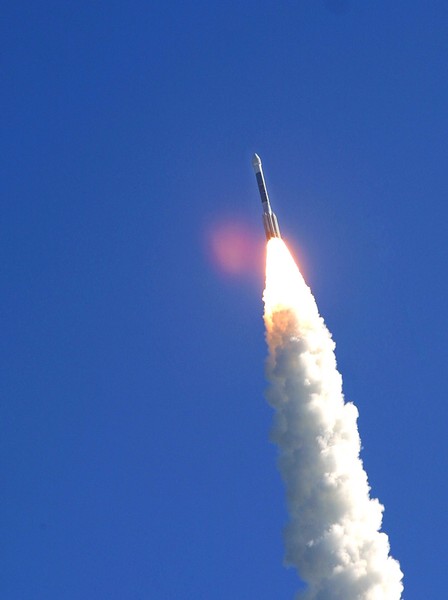
The Delta II soars through the sky.
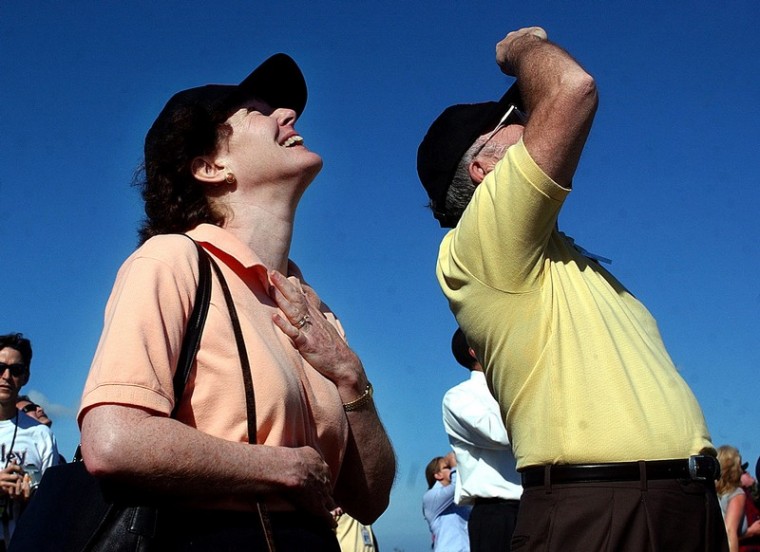
Onlookers watch as the spacecraft shoots into outer space.


