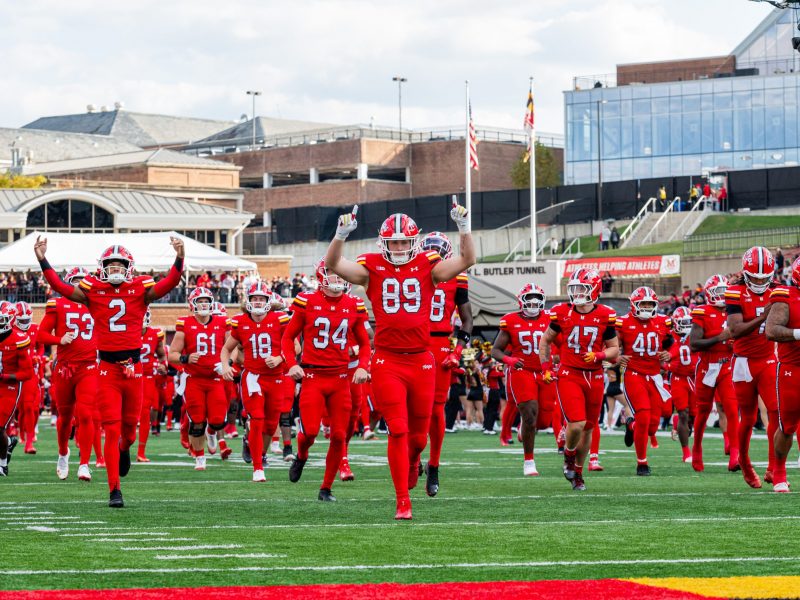
To see a slideshow of photos from the desert, click here.
FORT IRWIN, Calif.
When the two blasts went off — sending plumes of smoke rising from the center of town — Pvt. Justin Dulik thrust his Humvee into gear and sent it on a knuckle-whitening ramble down a bumpy desert hill, the vehicle in front kicking up a blinding dust as Dulik set out to back up his fellow troops.
They had originally entered to conduct presence control — talking with town leadership and intimidating any potential insurgents. But that mission quickly broke down when a civilian strapped with dynamite threw open his robe, killing the second platoon’s leadership on the ground.
Iraqi civilians surrounded the Humvee as it pulls up along the east side of town, moving in mobs toward soldiers ducking behind boxes and peeking around corners on the lookout for insurgents. They reached at the vehicle’s doors, some opening them and yelling “Yalla ruuhuu,” or “Get out of here” in Arabic.
On this day alone, Bravo Company of the Maryland National Guard’s 1st Battalion, 115th Infantry Regiment faced sniper fire, a car bomb and a suicide bomber. With a 25 percent Sunni Islam makeup, Al Jaffe is one of the more hostile towns in the area, designated a “black” town by intelligence reports.
It’s also completely fake.
The buildings that line the city streets — old, beat-up shipping crates. The shops buzzing with customers — one-story shacks labeled “Auto repair” and “Café” by cardboard signs. And the civilians yelling and pointing at the soldiers passing through their fictitious town — Iraqi-Americans from Southern California, handpicked by a defense contractor and screened by the CIA to help simulate a Middle East war zone at the Army’s sprawling, 1,200-square-mile National Training Center in the Mojave Desert.
This will be the last stop for five university students in the Olney, Md.-based unit before deploying for Iraq for 12 months, where they will join 150,000 U.S. troops — 40 percent of whom are reservists just like them — more than two years after the March 2003 invasion.
Just get it over with, Spc. Stephen Fyfe says.
“All of us are pretty pissed off. We’re tired of training. We’re away from our families. If we’re gonna be gone for this long, we might as well be doing what we are trained to do,” says Fyfe, a junior criminology and criminal justice major.
This is the last thing Fyfe wanted in his life right now. In the long term, his ideal is to be an officer in the Army. He enlisted in the National Guard in 2003, well aware of the post-Sept. 11 risk of deployment, because he says having experience as an enlisted soldier will help him become a better leader.
But back home in College Park, he enjoyed student life. He is dating “McKenzie Jolie,” the fake name used by one of the university’s four women who appeared last fall in Playboy’s “Girls of the ACC” issue. He just turned 21, and had hookups at Cornerstone Grill and Loft to boot. Waking up at 6 a.m. on a Saturday in the dirt surrounded by desert shrubs and a bunch of guys who haven’t showered in two weeks isn’t as good as it’s cracked up to be.
“Right now, I’d be waking up with a hangover and some company,” he says, standing next to his Humvee and shaking his head as he looks at his watch.
The soldiers have been away from home since January, a far cry from the Guard’s typical once-a-month, two-weeks-in-the-summer routine. The first three months were spent at Ft. Stewart, Ga., where they linked up with their 4,500-strong parent unit, the Georgia-based 48th Brigade Combat Team, and learned how to drive Humvees and M113 Armored Personnel Vehicles.
The soldiers feel like their time was mostly wasted there taking notes from inexperienced leadership, something the Ft. Irwin brass doesn’t dispute.
“Take everything Ft. Stewart told you and throw it out your ass. Braindump it,” instructs Gulf War veteran Maj. V.E. Hathaway, who helps oversee the exercises, drawing cheers from the troops.
Nights in the ‘Dust Bowl’
In two days, the unit is set to head into “The Box,” where a 24-hour war game begins against opposition forces, and the “enemy” could attack at any time. Because there are only blanks fired and no actual explosions, successes and failures will be tracked using a set of sensors worn on the torso and head. To simulate the trek from Kuwait into Iraq, the slow-moving convoy will go completely out of its way and turn a 10-mile journey into an 80-mile marathon.
But their first days at Ft. Irwin are spent in the “Dust Bowl” — a barbed wire-surrounded base camp characterized by a hanging fog — where soldiers enjoy amenities such as latrines, showers and a convenience store, all of which will soon be long gone.
“Showers are overrated anyway,” says Spc. Sasa Serpa, 21, a junior criminology and criminal justice major. “I haven’t showered in a week and a half.”
Out in the Mojave, the days are hot and dry, the nights freezing cold. Turbulent winds kick up enveloping fogs of dust and nip at tent flaps like a cracking whip. Over a span of six days, temperatures won’t reach higher than 85 degrees, while at night, they sink to the low 40s, with incredible wind gusts of sometimes more than 50 miles per hour, making it feel as if it were below freezing. Only a mortar blast or guard duty draws these soldiers out of the tent.
“You better get yourself one of these,” says junior sociology major Spc. Chris Balsam, clutching an empty blue Powerade bottle. “That way you don’t have to get up to piss.”
He’s not joking.
The next morning, Balsam walks by with the bottle, this time full of a yellow liquid that’s a different shade than Powerade’s lemon flavor. “See?” he says, swishing it around.
Balsam originally was in the Army’s ROTC program with hopes of becoming an officer. But then he wouldn’t get to kick down doors and shoot, so he bowed out.
When word came down that the unit was being deployed, Balsam — a Chestertown Hall resident assistant whose floormates knew he kept a machete and a tomahawk in his room — withdrew from the university and went to Florida with his family.
“If I get shot in Iraq and die, I’ll feel like a dumbass for spending my time in America taking exams,” he said.
Balsam is wide awake, and so are most of the others in the tent. “Shut the fuck up!” yell a few soldiers in futile attempts to quiet a tent full of restless men. Others read, write letters home to fiancées and girlfriends or clean their weapons. A few pass around a copy of College Girls pornographic magazine, and another appears to be sobbing into his pillow.
The next night, they’ll roll out sleeping bags and rest in the dirt and under the stars, Humvees blocking the fierce wind, before setting out for Al Jaffe.