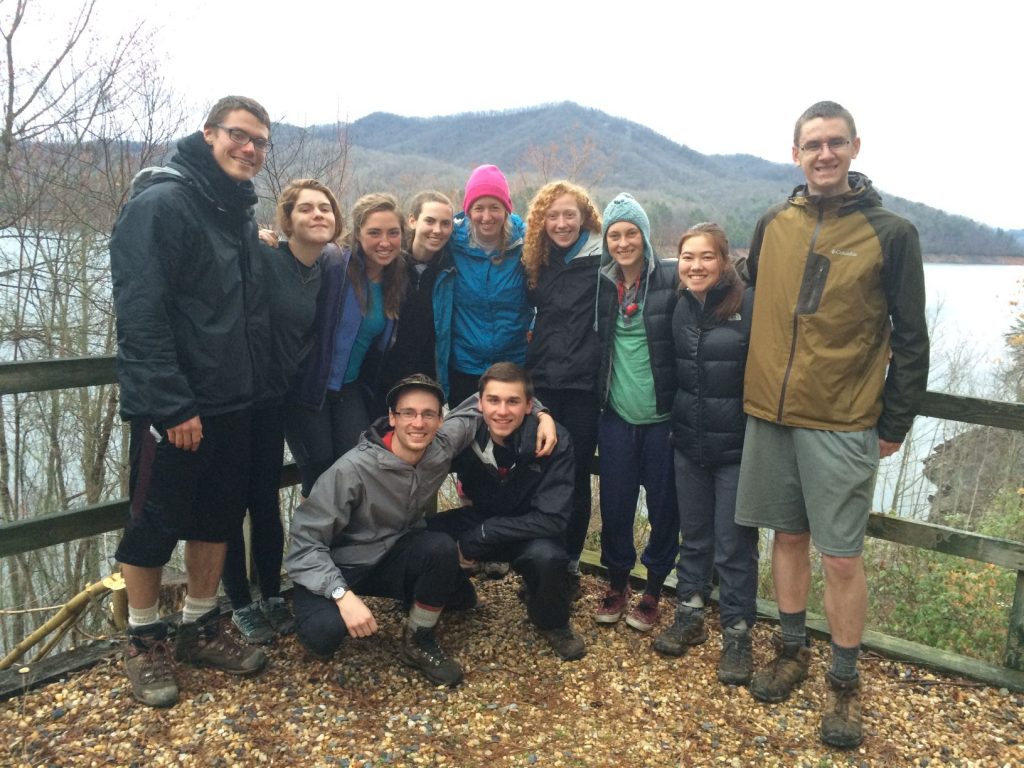
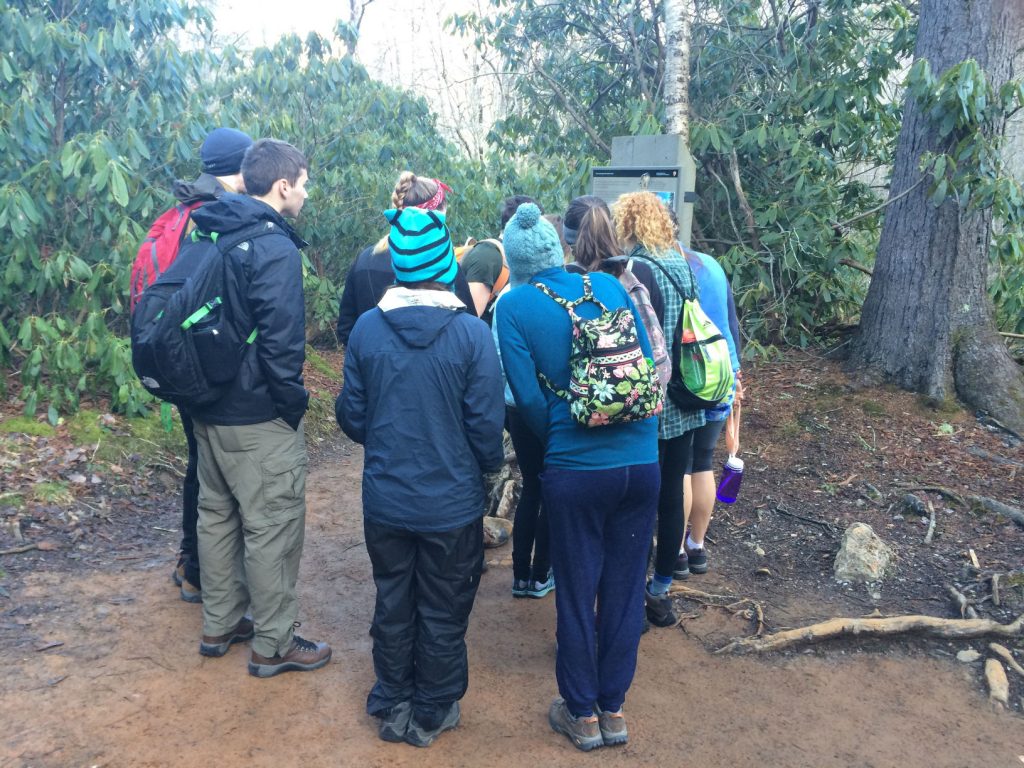
Eleven university students tromped up steep inclines and endured pouring rain, each carrying backpacks that weighed up to 50 pounds for days — but they did it with purpose.
As a part of the fourth-annual Maryland Adventure Program spring break backpacking trip along the Appalachian Trail, the organization has a goal to eventually complete the world’s longest continuously marked footpath.
“To [hike the trail] as an organization is an interesting thing, because it brings so many people into it,” said Warren Griffiths, a student trip leader for this year’s spring break trip. “At the end, if we are successful, it will be hundreds of people that have helped the University of Maryland to section-hike the Appalachian Trail.”
The Appalachian Trail is about 2,180 miles long and passes through 14 states, stretching from Georgia to Maine. The program started a series of trips during spring and Thanksgiving breaks since 2012, working toward completing the trail, said Amanda Even, the assistant director of the Maryland Adventure Program. Over spring break, the group tackled about 30 miles through North Carolina.
“What we decided to do as a program is to section-hike it,” Even said. “Basically doing one section at a time and then picking back up where we left off.”
The first group of spring break hikers went to Georgia in 2012 to start the trail. Continuing at this pace, Even said, hiking the entirety of the trail will take these participants about 30 to 40 years to complete.
“First, when I suggested it, people thought it was completely overwhelming, which in a way it can be because it is a really big task,” she said. “But each year we get to a new area, we get a little closer to home, so I think it picks up momentum as we stick with it.”
The three student trip leaders taught their fellow eight hikers about the Leave No Trace principles, which Griffiths said are seven guidelines for best respecting the environment and natural areas while camping and hiking.
Students make sure they properly dispose of their waste — both bodily and cooking — so it doesn’t affect water supplies or animal diets, said Griffiths, a sophomore anthropology and English major. When the group created “gray water,” or water that has been dirtied, the group members drank it, or “slurped the gurp.”
“It’s surprising because it’s dedication to absolutely leaving everything the way we found it and not having an impact,” Griffiths said.
Senior Chelsea Brown was a participant on this break’s hike, during which, in addition to the trail portion, the group completed a day-hike separate from the trail.
“It’s cool to feel part of a bigger thing,” said Brown, a dance and psychology major. “Just knowing I was part of a bigger group, it’s really cool.”
But the best part of the hiking trip is an outdoor environment that allows people to build relationships with one another and self-explore, said Jake Crouse, one of the trip leaders.
“[The backpacking experience] was accessibility and authenticity and interaction with others that I had never experienced before,” the junior mathematics and psychology major said.
Senior Connie Chow led last year’s spring break trip through the Appalachian Trail, and said meeting thru-hikers — people who hike the entire trail in 12 months or less — really changed her perspective on hard work, dedication and her ideas about cleanliness.
“After the second day, I started embracing it, having super-greasy hair and dirt under my fingernails,” said Chow, a civil engineering major. “I felt really one with nature.”
Some of the previous groups have met up with thru-hikers they encountered on the trail when they reached this state’s section of the trail, Even said. Thru-hikers usually take on a trail name while hiking the trail, Brown said, and sometimes other hikers do as well.
Some of this year’s group members took on an Appalachain Trail name, including Brown, whom others called “Polydactyl.”
“The Appalachian Trail has its own culture, trail culture; it’s a really neat experience to go out and to even be doing the section hike,” Even said.
More than 50 students have already taken part in the section hikes thus far, and they all have left a mark on this university’s progress on completing the Appalachian Trail.
“It’s cool to see different pictures from past Maryland hikers that are doing it; it’s cool to be a part of something bigger than ourselves,” Crouse said. “It’s such an ambitious goal.”