The burst of happiness one might get when looking at a picture of a puppy isn’t uncommon. Looking at pictures of dogs is biologically proven to reduce stress, as the hormone oxytocin is released in the body.
And a professor at this university is taking a closer look at the benefits of being around dogs for people with depression or anxiety.
Norman Epstein, a family science professor at this university, is about to begin a four-year study about how service dogs can affect post-traumatic stress disorder victims’ symptoms and family relationships.
“Many come back from deployment with PTSD symptoms, especially those who have been injured,” Epstein said to a group of about 20 students and faculty in a presentation at the public health school Wednesday afternoon.
READ MORE: UMD veteran groups sponsor food drive to carry legacy of 9/11 victims
About 30 percent of people who have been deployed experience PTSD, according to the Nebraska Department of Veterans’ Affairs.
Epstein’s study will take 20 researchers from the Walter Reed National Military Medical Center, the National Intrepid Center of Excellence and this university to look at the biological and psychological effects of dogs on service members, he said. The project will begin next year.
While service-dog training has been used as therapy for veterans for years, Epstein said, there hasn’t been any research showing what exactly the effects are or how much dog exposure can help PTSD victims.
Veterans who return home from war sometimes “feel really changed” and “have a different view of life and human nature,” Epstein said. All of these symptoms can not only affect the veteran, but can also alter relationships with family members and significant others.
“In the military, they are trained to be businesslike … and obey orders,” Epstein said. “They’re not used to being in touch with their feelings.”
PTSD treatment has included options such as one-on-one therapy or group sessions that included cognitive behavioral therapy, desensitization through controlled exposure to stimuli and cognitive restructuring, Epstein said in his presentation. However, about 60 percent of those who suffer from PTSD can’t get rid of it after trying these existing treatments, he said.
That’s where the dogs come in.
When two people have a positive interaction, levels of oxytocin, also known as the “cuddle chemical” or the “love hormone,” increase, which regulates stress, he said. The same is true for person-to-dog interactions — talking to, petting or playing with the animals can produce a significant change in neurological hormones and therefore lower stress, Epstein said.
READ MORE: University Police K-9 Explosive Unit dogs serve UMD events, visits
Epstein’s research aims to show the impact dog training has, providing veterans with six weekly sessions with the dogs and eventually training them to be service dogs for disabled war veterans.
Rick Yount, a psychologist and one of Epstein’s colleagues who focuses on helping veterans, said he “sees improvements within a day.”
“Recently, I’ve been researching trying to get into service dog training,” said Mishta Tak, a senior public health major. “It’s something I’ve always been interested in. I knew about dogs for leading the blind, disability dogs, but I wanted to learn more about this.”
Doctoral student Laura Drew said the program could “help a lot of people.”
Although this research won’t begin for another few months, Epstein said, he hopes the outcome will prove years of anecdotal evidence of service dog training therapy success.
“If we can help [veterans], that’s a pretty big step,” he said.
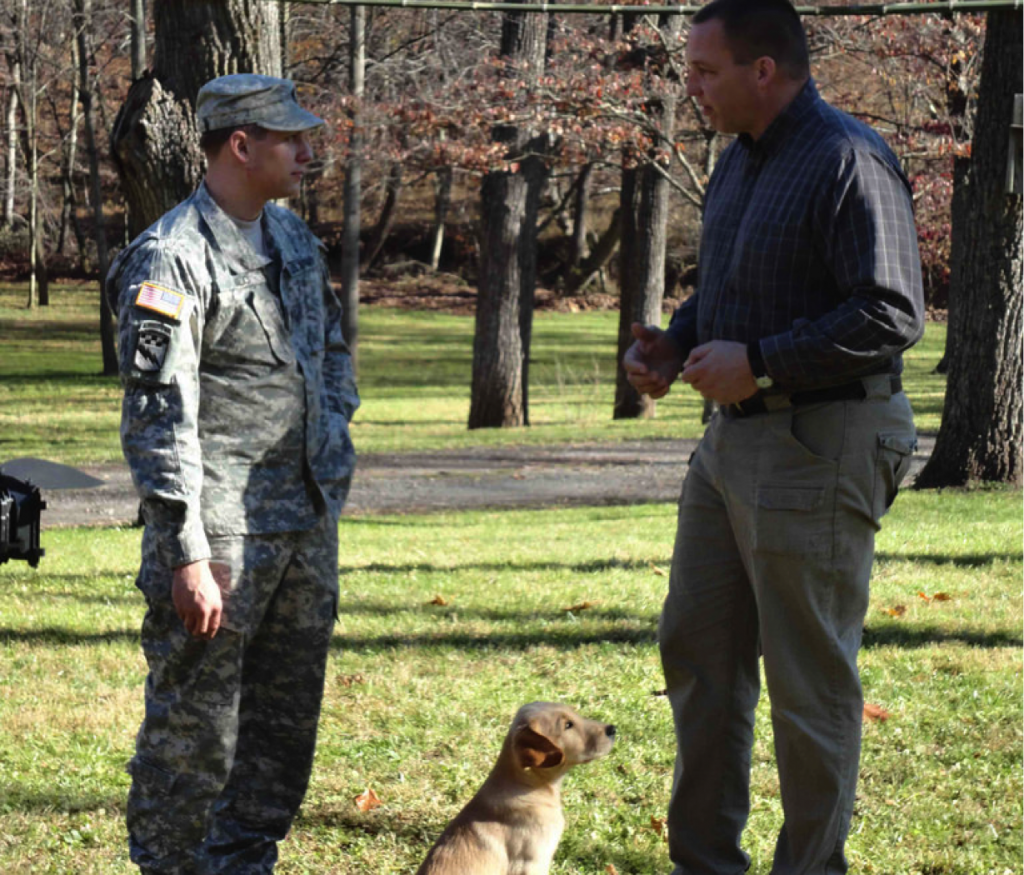
Rick Yount, executive director of Warrior Canine Connection, helps a veteran train a new service dog.
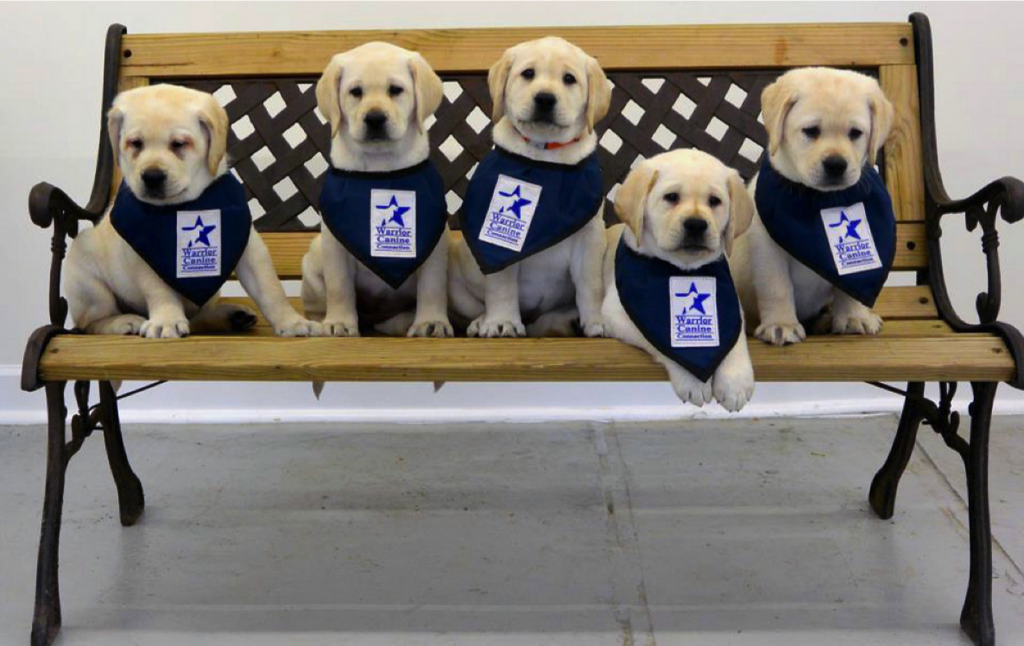
Puppies, like those show above, are trained to be service dogs by veterans as a form of therapy.